Fully Adhered Roofing System: Is It Right for Your Building?
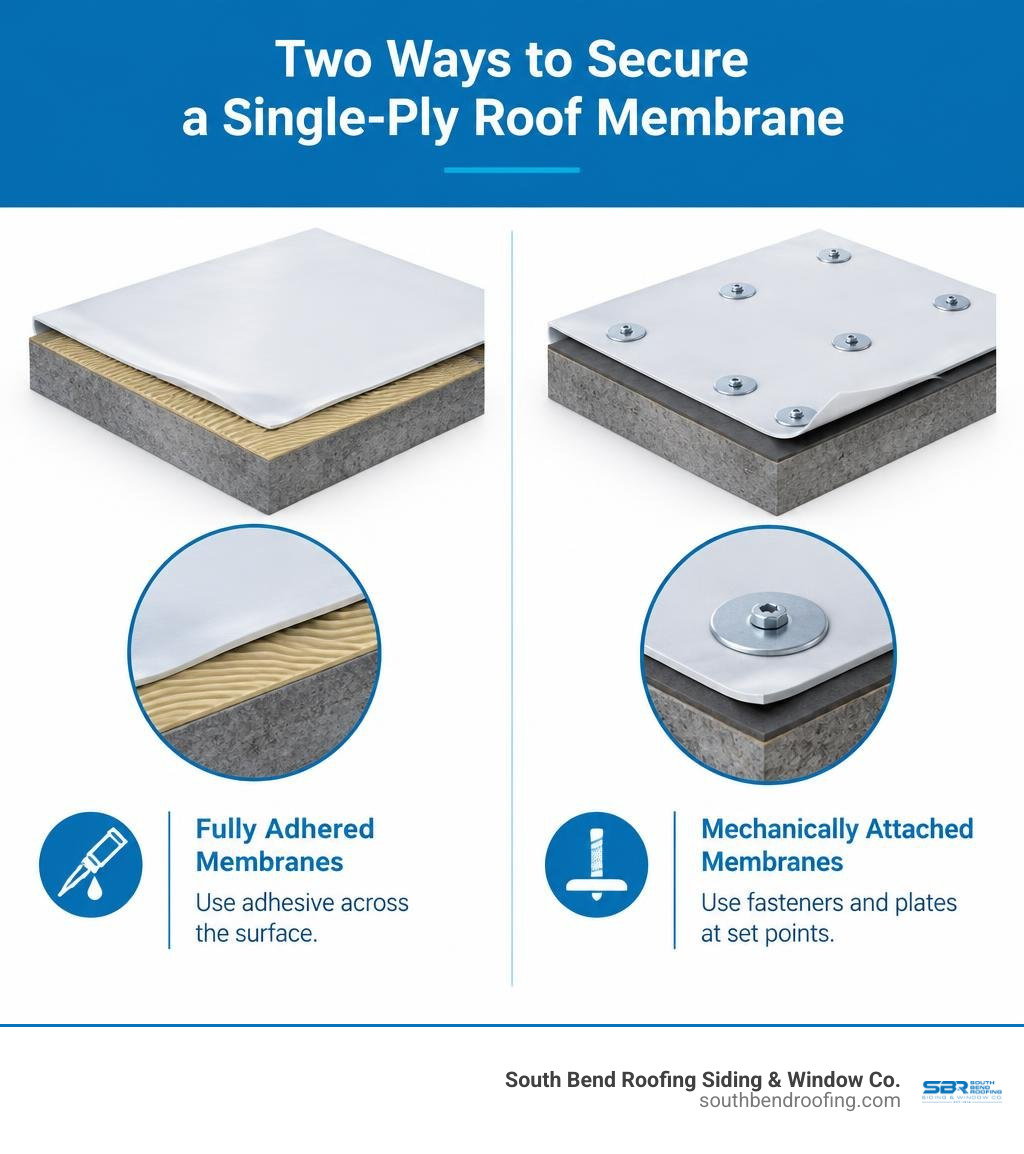
A fully adhered roofing system uses adhesive to bond a single-ply membrane across the roof surface. A mechanically attached system holds the membrane down with fasteners and plates at set points. Fully adhered roofs can offer a smoother surface and less membrane movement in wind, but they often take longer to install and cost more. The right choice depends on your building's wind exposure, roof design, budget, and installation conditions.
I'm James Spillman, Vice President of South Bend Roofing Siding & Window Co. From our company's roofing experience since 1914, I help Indiana and Michigan building owners weigh whether a fully adhered roofing system fits their needs.
What Is a Fully Adhered Roofing System?
How a fully adhered roofing system works
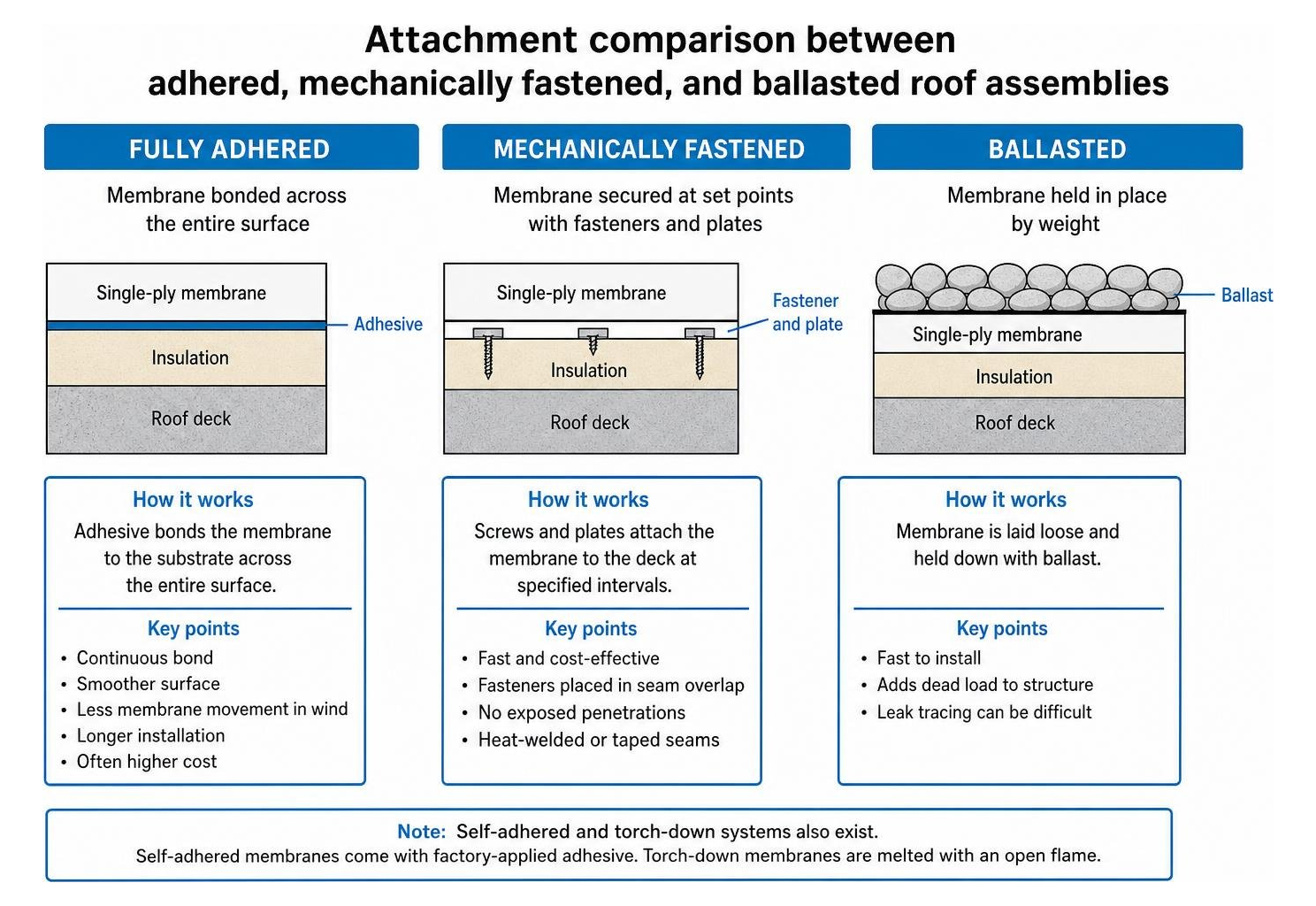
In a fully adhered assembly, the single-ply membrane is bonded directly across the underlying substrate using an approved bonding adhesive. Instead of relying on physical screws driven through the top sheet at set intervals, the adhesive creates a continuous chemical or mechanical bond over the entire contact area.
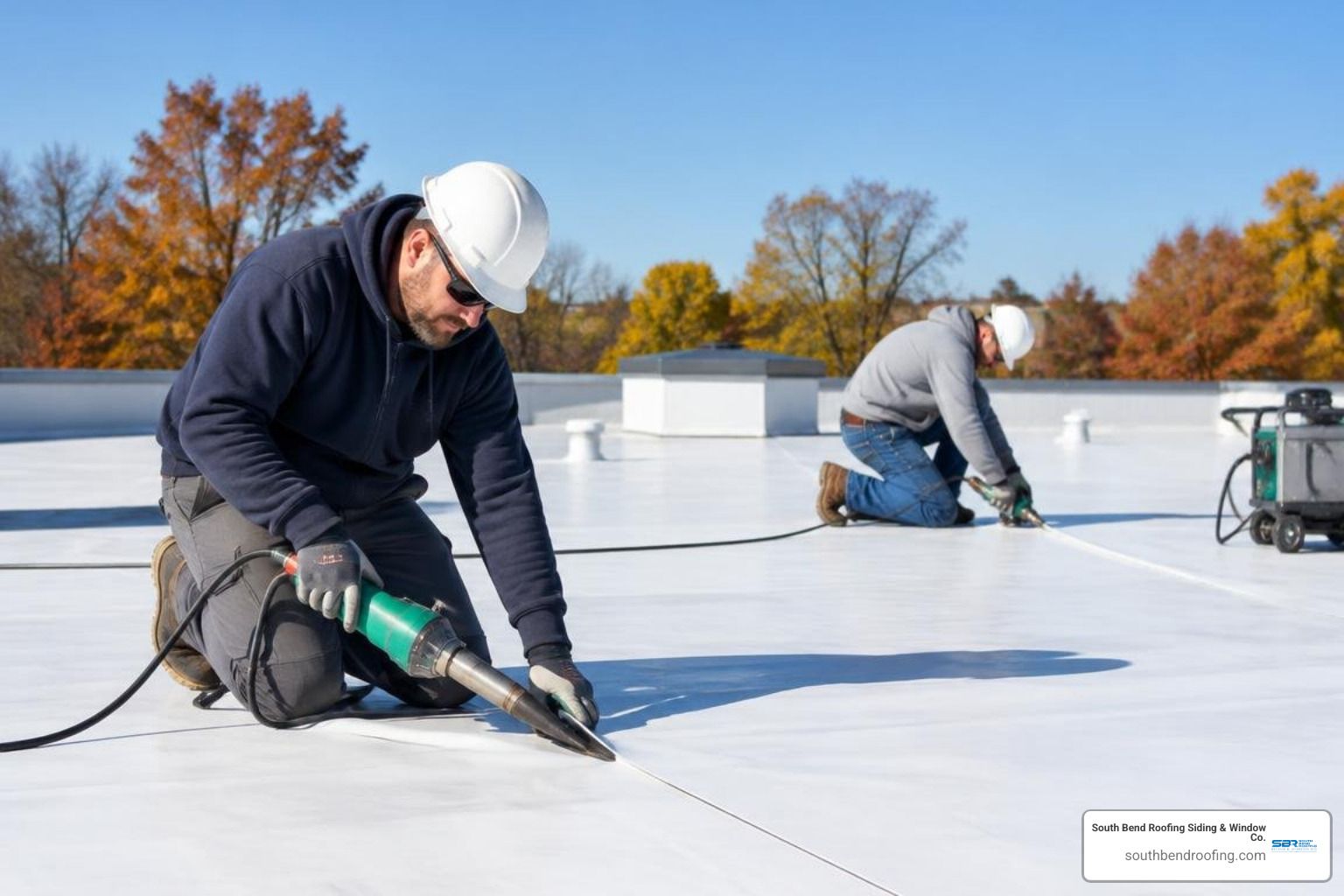
The installation begins with a clean, dry, and structurally sound deck surface. Contractors apply the specified adhesive—which can be solvent-based, water-based, or low-VOC formulations—to the substrate, the membrane underside, or both, depending on product requirements. Once the adhesive achieves the correct open time and tackiness, the membrane is rolled out and mated to the surface. Installers then use a weighted roller to eliminate air pockets and guarantee full surface contact. The membrane seams are subsequently sealed using hot-air welding or manufacturer-approved seam tapes to establish a watertight barrier. You can learn more about how different single-ply configurations work in our comprehensive membrane roofing guide, or review industry standards established for EPDM attachment methods.
How mechanically attached and other systems differ
Mechanically attached systems use heavy-duty steel screws and barbed or flat stress plates to clamp the membrane to the structural deck. These fasteners are placed inside the seam overlaps at manufacturer-calculated intervals. The next roll of membrane overlaps the fasteners and is heat-welded or taped, leaving no exposed penetrations in the final weather-facing sheet.
While mechanical attachment is fast and cost-effective, other legacy and modern attachment styles also exist across the commercial sector:
- Ballasted systems: Large membrane sheets are laid loose over the deck and weighed down with smooth river rock or concrete pavers. While fast to lay, ballasted systems add considerable dead load to the building structure and make leak tracing difficult. Ballasted assemblies account for roughly 35 percent of EPDM installations today.
- Self-adhered systems: Often used with modified bitumen or specially engineered single-ply rolls, these membranes arrive from the factory with release liners and pre-applied adhesive, eliminating on-site adhesive buckets and rollers.
- Torch-down systems: Traditional modified bitumen sheets are melted to the underlying base sheet using an open propane flame, a technique rarely used on modern single-ply installations due to fire safety restrictions.
Which membranes can be fully adhered?
Most modern single-ply formulations perform exceptionally well in fully adhered assemblies:
- Thermoplastic Polyolefin (TPO): TPO is widely chosen for its energy-saving reflective white surface and heat-welded seams. When fully adhered, TPO provides a clean, flat appearance free from surface wrinkles. Industry analysis such as this adhered versus mechanical TPO comparison highlights how bonding creates an evenly distributed wind barrier.
- Ethylene Propylene Diene Monomer (EPDM): EPDM synthetic rubber remains a proven choice for weatherability. Non-reinforced and scrim-reinforced sheets can both be adhered. For detailed assembly steps, see our overview of EPDM membrane installation.
- Polyvinyl Chloride (PVC): Highly resistant to chemicals, oils, and rooftop grease, PVC is ideal for restaurants, manufacturing plants, and healthcare facilities. Our specialized PVC roofing installation services ensure precise membrane bonding and welded edge details.
Benefits, Limitations, and Attachment-System Comparison
Benefits of a fully adhered roofing system
- Superior wind-uplift performance: Because the membrane is bonded across every square inch, uplift forces distribute evenly across the entire roof plane rather than concentrating on individual fastener rows.
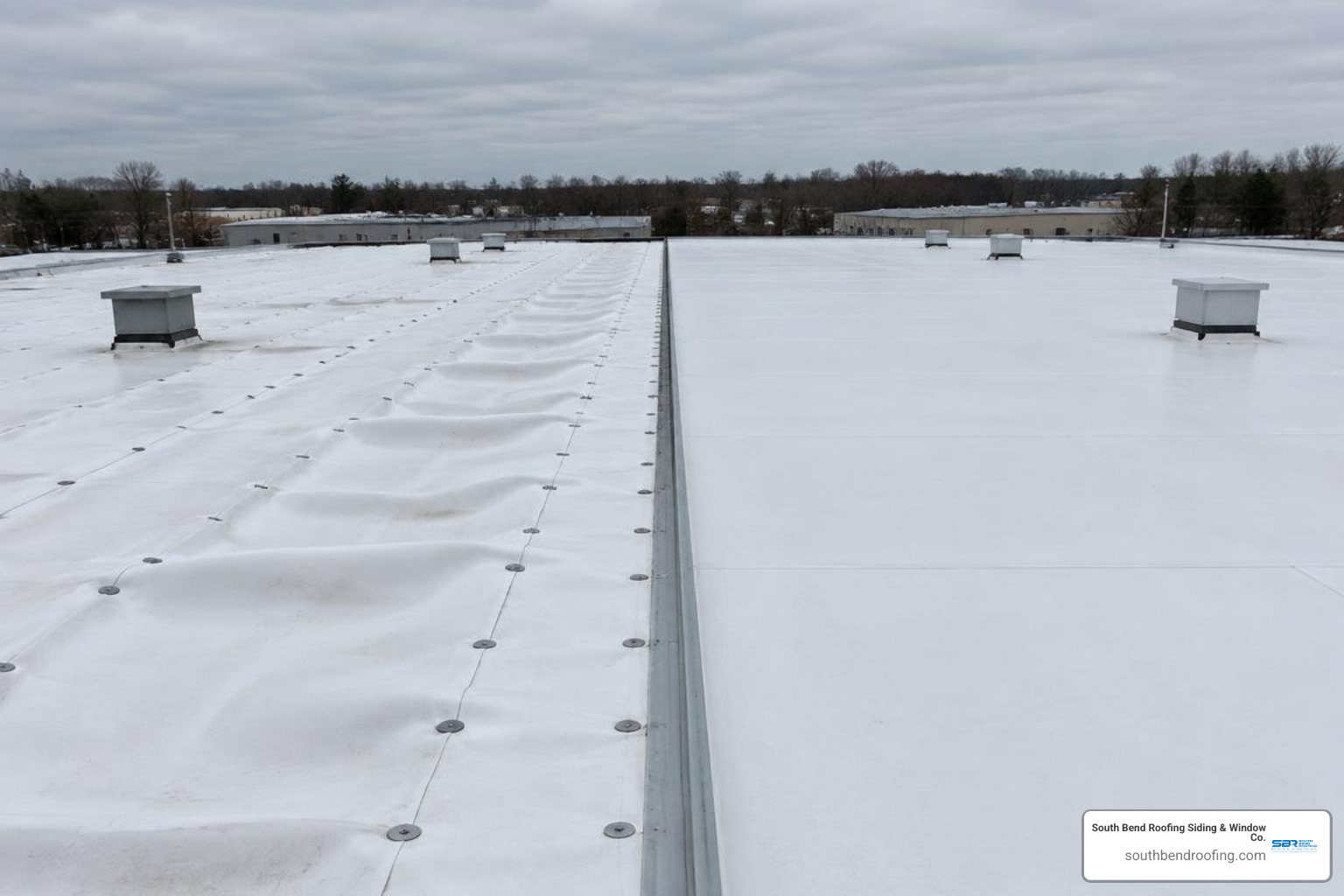
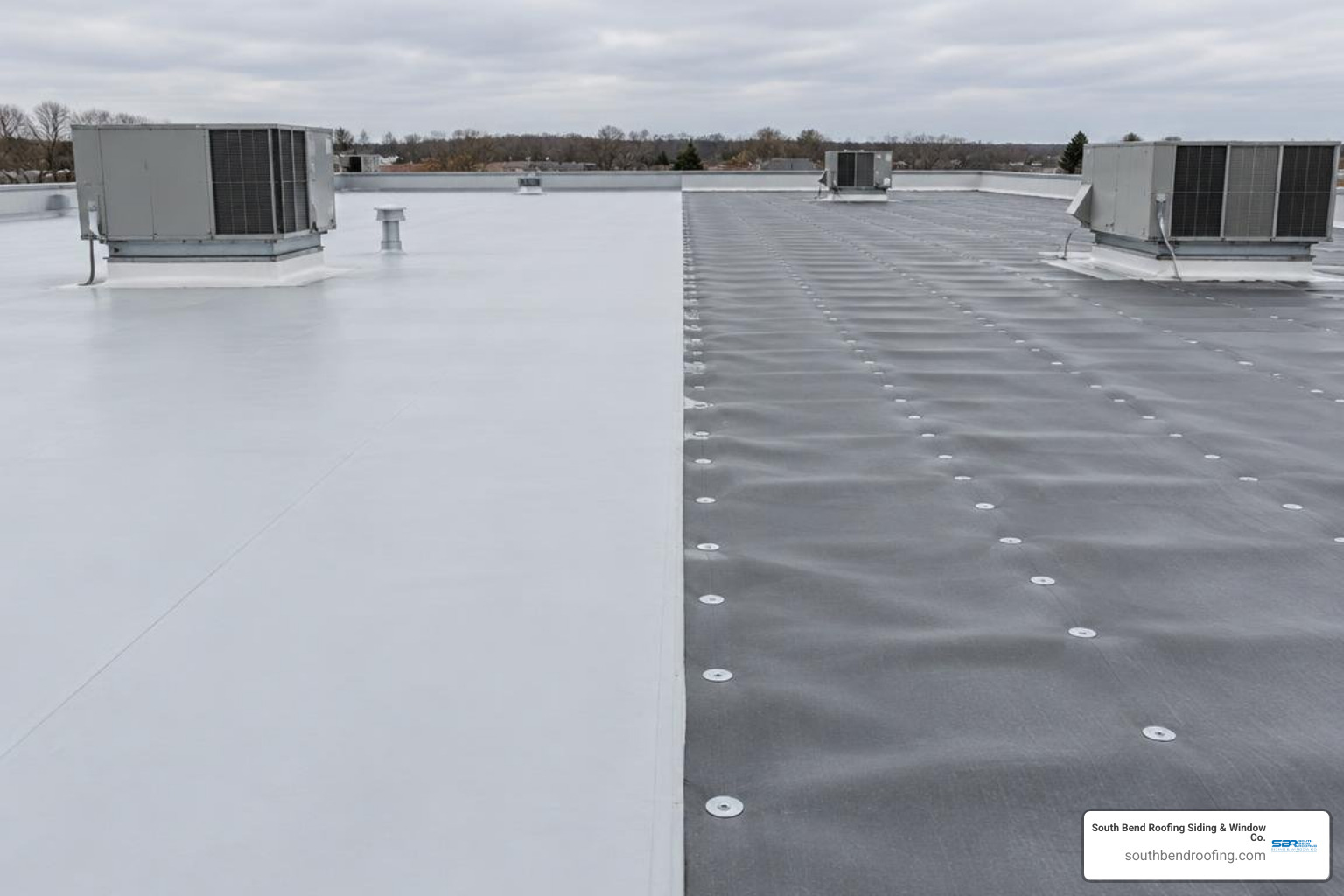
- Elimination of membrane flutter: Mechanically fastened sheets tend to billow and lift between fastener rows during moderate to severe wind events. Fully adhered sheets remain flat, eliminating dynamic mechanical strain around fastener plates.
- Aesthetic appeal and versatile geometries: Adhered roofs lay completely flat without visible fastener ridges. This makes them ideal for curved barrel roofs, steep mansards, and high-slope architectural sections visible from ground level.
- Enhanced hail and puncture resistance: A fully bonded membrane supported by a dense cover board offers no loose slack, reducing the risk of tearing during severe storm impacts.
Challenges and tradeoffs
While fully adhered assemblies offer high structural performance, they come with logistical and financial tradeoffs:
- Higher initial investment: Adhered roofs require substantially more labor, specialized bonding agents, and longer application cycles than mechanically attached alternatives.
- Stringent weather windows: Most adhesives require dry, warm conditions to cure properly. While some advanced adhesives can be applied down to 25°F (-4°C), severe winter temperatures in the Midwest can halt adhesive-based projects.
- Substrate sensitivity: Adhesives will not bond properly to dirty, wet, or dusty surfaces. Thorough preparation and substrate testing are essential before rolling out sheets.
- Odor and VOC management: Solvent-based bonding adhesives produce strong odors that can enter building HVAC intakes if ventilation is not managed carefully during application.
Fully adhered vs. mechanically attached at a glance
| Performance Factor | Fully Adhered System | Mechanically Attached System |
|---|---|---|
| Attachment Method | Continuous adhesive layer across 100% of the surface | Heavy-duty screws and stress plates placed in seams |
| Wind Uplift Distribution | Uniformly distributed across the entire substrate | Concentrated stress lines at individual fastener points |
| Membrane Movement | Minimal to none; no billowing | Noticeable "flutter" between attachment rows during high winds |
| Weather Windows for Install | Sensitive to low temperatures and moisture; needs dry conditions | Can be installed across broad seasonal temperature ranges |
| Relative Upfront Cost | Higher due to extra material, adhesive, and application labor | Lower upfront material and labor investment |
| Water Migration Risk | Water cannot travel far beneath a fully bonded sheet | Water can track freely beneath the membrane between fastener lines |
| Leak Tracing Ease | Ceiling leak entry usually aligns closely with membrane puncture | Water may enter the building far from the actual surface hole |
| Visual Appearance | Completely smooth and uniform; ideal for high visibility | Fastener rows and slight billowing visible under direct light |
Installation Requirements and Building-Specific Considerations
Conditions and steps for a fully adhered installation
A durable adhered roof requires methodical workmanship and strict adherence to manufacturer specifications:
- Substrate preparation: The underlying substrate must be swept clean of debris, dirt, and moisture. Any loose decking or damaged structural components must be repaired first.
- Moisture and temperature evaluation: Installers monitor ambient temperatures, dew points, and substrate moisture levels to verify that adhesives will cure without trapping moisture.
- Even adhesive spreading: The bonding agent is rolled or sprayed at the manufacturer's specified spread rate to avoid dry spots or heavy puddles.
- Tack time verification: The crew checks that the adhesive has flashed off solvents properly before mating the membrane. Rolling a membrane onto wet adhesive can trap gases and cause blistering.
- Weighted roller smoothing: A heavy split-steel roller (typically 75 to 150 lbs) is pushed over the membrane in multiple directions to eliminate trapped air and lock the adhesive bond.
- Hot-air seam welding: Laps are welded with automated or handheld hot-air tools, and probed to verify structural seam continuity.
- Detail flashing and inspection: Penetrations, curbs, parapet walls, and drains are flashed in accordance with strict manufacturer standards to preserve warranty coverage.
Weather, wind, and roof design
Building location and geometry heavily influence attachment choice. Under Indiana and Michigan wind codes, buildings with significant height, open terrain exposure (such as open fields or lakefronts), or large interior overhead doors experience intense uplift pressure at corners and perimeter zones. Fully adhered systems excel in these exposure categories because they eliminate the concentrated stress points that can cause fasteners to fatigue over time.
However, seasonal weather must be taken into account. If a commercial project must proceed during freezing winter months, mechanical attachment avoids the risk of frozen or improperly cured adhesives. For warm-season installations, adhered systems provide exceptional resistance against severe Midwest storms.
Cost, durability, and leak detection
When evaluating lifecycle value, consider how each attachment method behaves over decades of building use. In a mechanically attached roof, a puncture allows water to travel horizontally between the loose membrane and the underlying substrate, emerging into the building interior dozens of feet away from the initial puncture. This makes leak tracing challenging.
In a fully adhered assembly, the adhesive acts as an internal grid. If a puncture occurs, water is largely confined to the immediate area around the breach, limiting lateral water migration. While this can occasionally mask minor wetness until water works its way down, it protects the larger roof deck from widespread saturation.
Regardless of whether a project calls for mechanical fastening or full adhesive bonding, achieving peak durability depends on precise field execution. You can explore our quality standards by reviewing our detailed guide to membrane roofing installation.
Frequently Asked Questions About Fully Adhered Roofing
Is a fully adhered system better in high-wind areas?
Yes, fully adhered assemblies often achieve superior wind-uplift performance because they distribute uplift forces evenly across the entire roof surface. However, a properly engineered mechanically attached system with dense fastener spacing in perimeter and corner zones can also meet strict building code requirements. The whole-system design—including the strength of the structural deck and cover board—ultimately determines wind performance.
Does fully adhered roofing cost more than mechanically attached roofing?
Yes. Fully adhered roofs require more labor hours, specialized adhesive materials, and extensive surface preparation, making their upfront installation cost higher than mechanically attached systems. Building owners often weigh this initial investment against benefits like reduced wind flutter, limited water migration, and aesthetic appeal.
Does attachment method determine how long a roof lasts?
While attachment method influences wind resistance and localized strain, overall roof longevity depends primarily on installation quality, proper roof drainage, routine maintenance, and membrane thickness. Both fully adhered and mechanically fastened roofs can deliver decades of dependable service when installed by certified professionals.
Conclusion
Selecting the right attachment method for your commercial building requires balancing wind exposure, structural deck type, seasonal weather conditions, aesthetic requirements, and project budget. Rather than relying on a one-size-fits-all approach, evaluating your complete roofing assembly ensures optimal protection and lifecycle value.
At South Bend Roofing Siding & Window Co., we have delivered trustworthy residential and commercial roofing solutions across Indiana and Michigan for over 110 years, roofing continuously since 1914. Whether your facility requires advanced PVC, TPO, or EPDM single-ply membranes, our certified installers tailor each project around your daily operations to keep disruption to a minimum.
If your roof has experienced storm damage or you are planning a facility upgrade, we provide honest recommendations: when a professional repair can extend your roof's life, we will tell you so rather than pushing for a complete replacement. Our team is always ready to walk you through your installation options and explain our extensive warranty coverage.
Explore our full range of commercial roofing services or visit our homepage to request a roofing evaluation. Call us today at (574) 288-4764 to schedule your free roof inspection and written estimate.