How to Verify Rubber Roofing Contractors
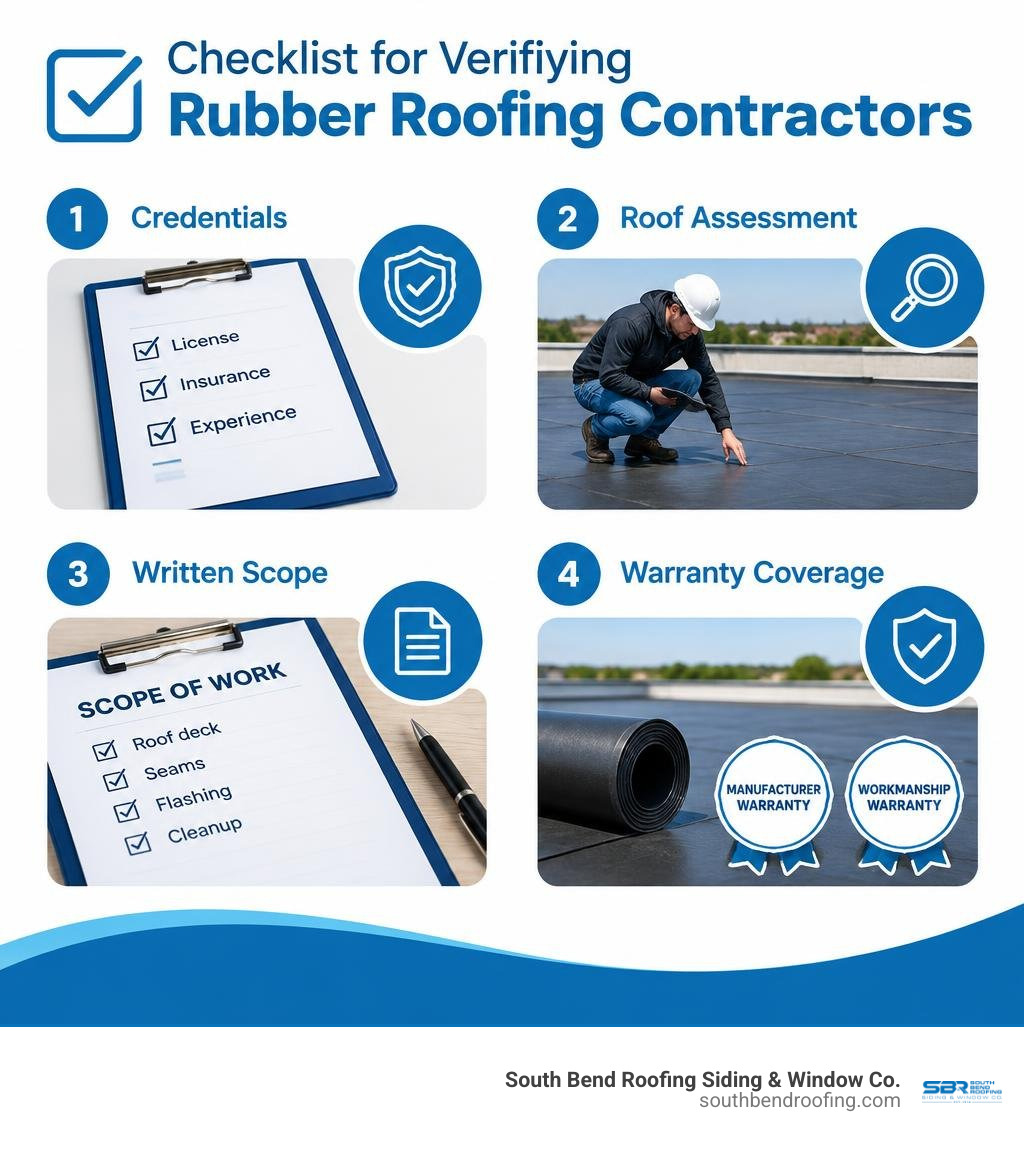
Before hiring rubber roofing contractors, check their qualifications and the proposed work. Verify the required license and insurance, ask about EPDM installation experience, and get a written estimate that covers the roof deck, seams, flashing, and cleanup. Review both manufacturer and workmanship warranty coverage; ask the contractor to explain what each covers. If the roof is leaking, ask whether a repair could solve the problem before agreeing to a replacement.
I’m James Spillman, vice president of South Bend Roofing Siding & Window Co., which has served the area since 1914. My work with certified installers on residential and commercial roofing projects has shown me what property owners should ask rubber roofing contractors before signing.
Understanding EPDM: Material Performance, Durability, and Applications
Ethylene Propylene Diene Monomer (EPDM) is an exceptionally durable synthetic rubber membrane engineered specifically for flat and low-slope roof structures. Widely recognized throughout the commercial and residential construction sectors, EPDM delivers outstanding weather performance by expanding and contracting effortlessly across dramatic seasonal shifts. Its inherent elasticity allows the material to withstand Midwest temperature extremes without cracking, drying out, or becoming brittle.
EPDM offers natural UV stability and ozone resistance, making it an enduring solution for large commercial buildings, low-slope home additions, carports, and industrial warehouses. Because the material does not require open-flame application, professional membrane roofing installation creates a much safer job site during both new construction and full reroofing projects.
When evaluating low-slope options, property owners frequently compare EPDM with thermoplastic membranes such as TPO and PVC (including custom-fabricated Duro-Last systems). Each material offers distinct physical characteristics:
| Roofing Membrane | Material Composition | Primary Installation Method | Flexibility & Tear Resistance | Best Applications |
|---|---|---|---|---|
| EPDM Rubber | Synthetic thermoset elastomer | Fully adhered or mechanically attached with bonded seams | Outstanding flexibility; superior thermal shock and hail resistance | Low-slope residential additions, commercial facilities, broad flat roofs |
| TPO | Thermoplastic polyolefin | Mechanically fastened or adhered; heat-welded seams | High puncture resistance; bright reflective surface | Commercial buildings targeting lower solar heat absorption |
| PVC (Duro-Last) | Polyvinyl chloride reinforced with polyester scrim | Mechanically attached or fully adhered; hot-air welded seams | Exceptional chemical and fire resistance; pre-fabricated precision | High-performance commercial and industrial roofs with grease/chemical exhaust |
Industry research and laboratory testing have confirmed the remarkable longevity of synthetic rubber assemblies. Field evaluations cited by the EPDM Roofing Association show that properly engineered and maintained EPDM membranes regularly perform for decades under harsh environmental exposure. Selecting the appropriate membrane thickness—typically ranging from 45 to 90 mil—ensures your structure receives the optimal level of defense against punctures and sustained foot traffic.
Signs You Need a Flat Roof Replacement vs. Repair
A dependable roofing partner will always evaluate whether targeted repairs can restore your current membrane before recommending a total tear-off. Minor punctures, localized seam separation, or isolated flashing issues can frequently be resolved through expert sealing and patching. Timely maintenance extends the working life of your system and prevents water from penetrating into the structural layers beneath.
However, widespread structural wear calls for a comprehensive replacement. When severe storms strike, having access to dependable 24-hour roof repair allows you to secure active leaks immediately while assessing the long-term health of the roof.
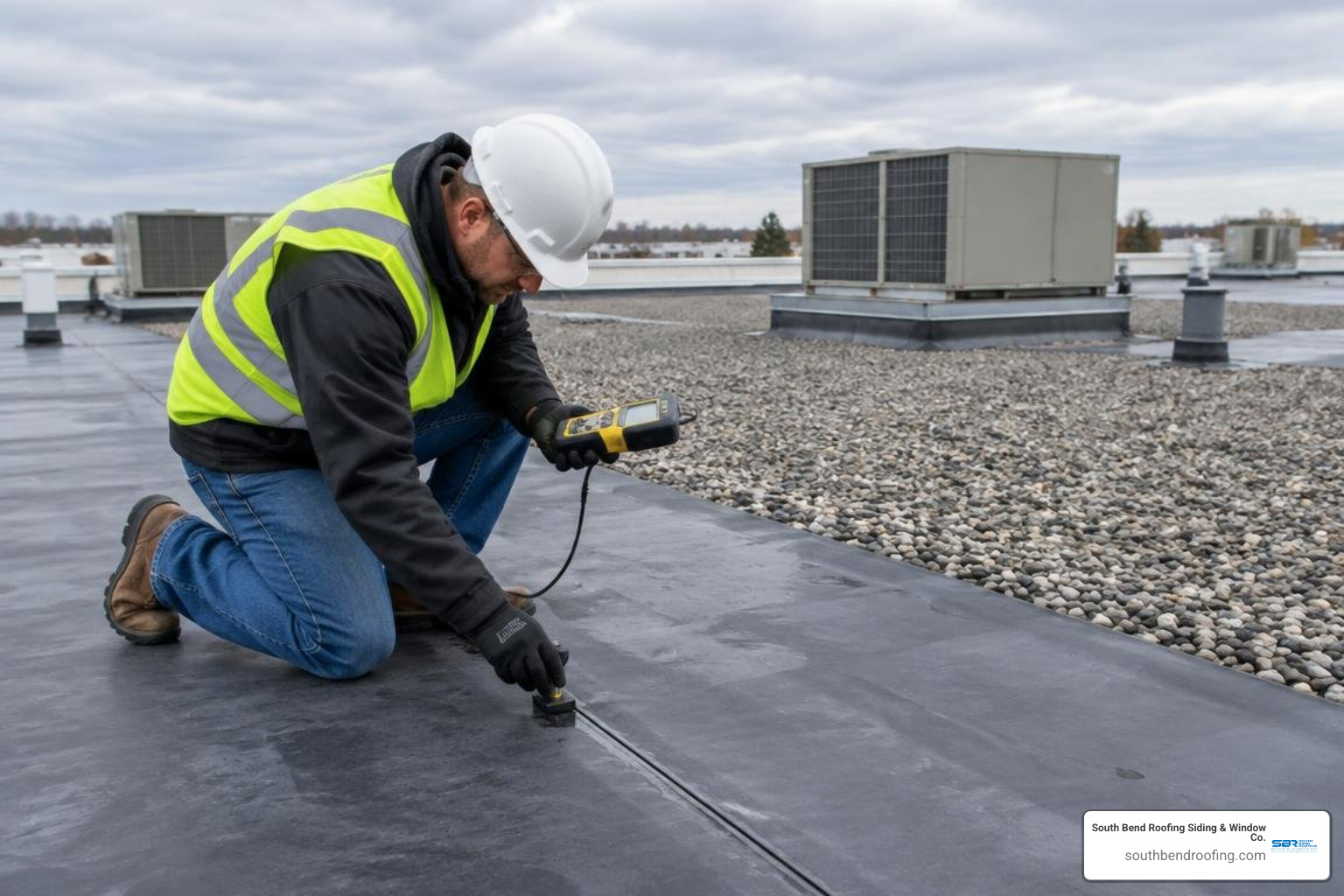
Key indicators that signal the need for a full flat roof replacement include:
- Chronic Ponding Water: Flat roofs require a subtle slope to direct moisture toward scuppers and internal outlets. Low spots that hold water for days indicate structural deflection or compromised underlying decking.
- Widespread Seam Separation: When extensive lengths of membrane seams delaminate across the roof field, moisture can travel unchecked beneath the entire assembly.
- Significant Membrane Shrinkage: Aging, lower-grade membranes can shrink over time, pulling away from parapet walls, flashings, and perimeter terminations.
- Extensive Substrate Softness: Spongy sections underfoot point to saturated wooden or concrete decking, which compromises the structural deck integrity.
- Multiple Layer Failures: When an older roof has undergone repeated patch jobs over multiple failing layers, a clean rebuild becomes the most reliable path forward.
Replacing a degraded flat roof protects interior assets and enhances overall property value. In residential construction, our residential roofing services help homeowners restore structural integrity and curb appeal. Industry reports indicate that replacing a worn roof can return a substantial percentage of the project investment at resale, protecting your equity while eliminating chronic leak risks.
The EPDM Membrane Installation and Replacement Process
A dependable flat roof replacement requires meticulous attention to substrate preparation and flashing details. Unlike simple shingle applications, low-slope rubber installations rely on continuous, unbroken barriers to manage water movement.
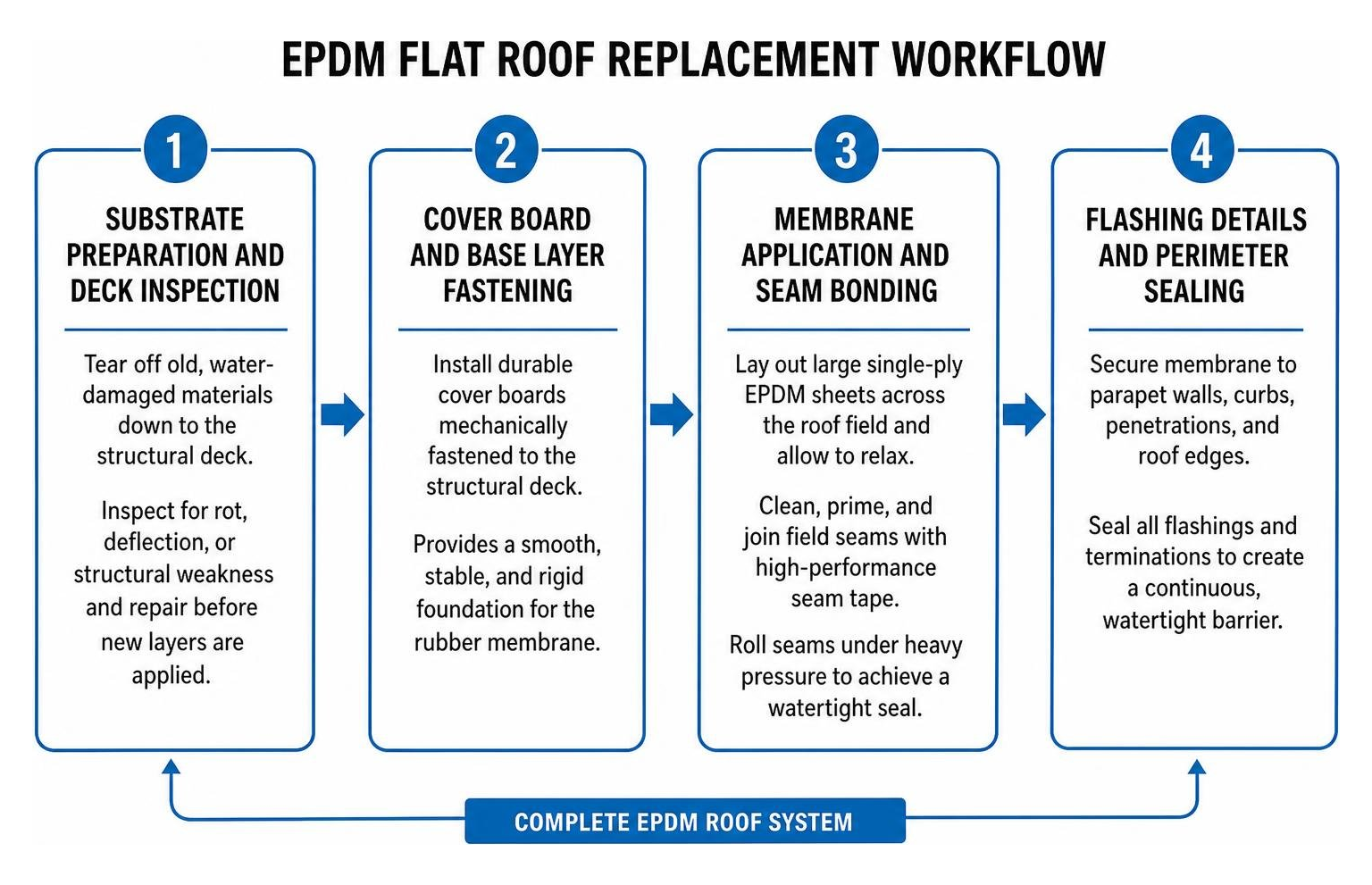
The complete replacement workflow involves four critical stages:
- Substrate Preparation and Deck Inspection: Crews perform a thorough tear-off of old, water-damaged materials down to the structural deck. The wooden or concrete decking is carefully inspected for rot, deflection, or structural weakness and repaired before new layers are applied.
- Cover Board and Base Layer Fastening: Modern roof assemblies incorporate durable cover boards mechanically fastened to the structural deck, providing a smooth, stable, and rigid foundation for the rubber membrane.
- Membrane Application and Seam Bonding: Large single-ply EPDM sheets are laid out across the roof field and allowed to relax. The membrane is then secured using advanced adhesive bonding agents. Field seams are cleaned, primed, and joined using high-performance seam tape and rolled under heavy pressure to achieve a watertight seal.
- Flashing, Terminations, and Drainage Details: Installers reinforce all roof penetrations—such as plumbing vents, HVAC curbs, skylights, and parapet walls—with uncured EPDM flashing, custom corner patches, and compression termination bars.
For complex properties, complete roof replacement and tear-offs ensure that hidden deck rot is fully addressed. In select situations where local building codes permit and the existing substrate remains structurally sound and dry, property owners may explore targeted re-roofing options to streamline project execution.
How to Vet Rubber Roofing Contractors for Your Project
Vetting rubber roofing contractors requires looking closely at their installation practices, project management approach, and credential verification. A flat roof cannot hide installation errors; if seams are improperly primed or terminations lack mechanical compression, the roof will leak regardless of material quality.
For commercial facilities, hiring qualified commercial roofing services ensures that high-volume work proceeds cleanly without disrupting your daily operations or customer access. When vetting prospective contractors across regional markets, look for proven stability, detailed project scopes, and responsive communication.
Essential Credentials Rubber Roofing Contractors Must Provide
Before accepting any estimate, verify that your prospective roofing specialist holds the proper operational credentials:
- Valid State Licensing: The contractor must be formally registered and licensed to perform commercial and residential structural roofing within your state.
- Comprehensive Liability and Workers' Compensation: Verify that coverage is active and request a certificate of insurance sent directly from the carrier. This protects you from liability regarding workplace injuries or property damage.
- Manufacturer Certifications: Certified installers undergo strict technical training to apply specialized adhesives, tapes, and detail flashings according to manufacturer specifications.
- Clear Workmanship Warranty Coverage: In addition to standard manufacturer material coverage, dependable contractors provide their own comprehensive workmanship warranty to protect against installation defects.
Questions to Ask Rubber Roofing Contractors Before Signing
Engage prospective contractors with targeted questions to assess their technical experience and operational accountability:
- How many years of direct experience do your crews have installing EPDM and commercial single-ply membranes?
- Will an experienced site supervisor remain on-site throughout the entire tear-off and membrane application?
- What specific steps do you take to inspect and repair damaged roof decking once the old roof is removed?
- How do you protect interior spaces and surrounding landscaping against unexpected weather during the project?
- Can you explain the exact differences and coverage details between the manufacturer material warranty and your workmanship warranty?
- What is your protocol if unseen structural issues or moisture problems are discovered during tear-off?
Frequently Asked Questions About EPDM Roofing Systems
How long does an EPDM rubber roof typically last?
An EPDM rubber roof offers remarkable long-term durability, frequently performing reliably for 20 to 30 years or more when installed by certified specialists. The total service life depends on membrane thickness (such as 60-mil or 90-mil options), regular inspection schedules, climate exposure, and the quality of the initial seam and flashing work. Keeping drainage outlets clear and promptly addressing minor surface punctures ensures the membrane maintains its elastomeric integrity over decades.
What factors influence the cost of a rubber roof replacement?
The overall investment for an EPDM flat roof replacement is shaped by several project-specific variables:
- Total Square Footage and Roof Geometry: Larger footprints require more material, while complex configurations with multiple parapet transitions require detailed hand labor.
- Number of Roof Penetrations: HVAC equipment curbs, skylights, vent stacks, and internal drains require custom flashing details that increase labor time.
- Tear-Off and Substrate Repairs: The labor required to remove multiple old roofing layers and repair damaged decking impacts the scope.
- Building Height and Accessibility: Multi-story buildings requiring dedicated material hoisting and staging demand extra logistics compared to single-story structures.
- Membrane Thickness and System Type: Upgrading to heavier-gauge reinforced membranes or fully adhered systems adjusts the overall material requirements.
Does a rubber roof require regular maintenance?
Yes, regular preventative maintenance is vital to protecting any low-slope roofing assembly. We recommend scheduling a professional inspection at least twice a year—ideally in the spring and autumn—as well as following severe wind or hail storms. Routine maintenance involves clearing leaves and dirt from drainage pathways, checking field seams for early signs of tension, inspecting curb and edge metal flashings, and ensuring rooftop equipment does not introduce puncture risks to the rubber surface.
Conclusion
Protecting your building from water intrusion starts with choosing the right membrane and a dedicated, certified installation team. By using a thorough verification checklist, you can confirm licensing, assess detailed scopes of work, and ensure your replacement project is executed with precision.
At South Bend Roofing Siding & Window Co., we bring more than 110 years of trusted local craftsmanship to every project, providing skilled residential and commercial flat roofing installations, prompt repairs, and reliable workmanship warranty coverage. To assess your flat roof and discuss your replacement options, contact our experienced team today at (574) 288-4764 for a free roof inspection and detailed estimate.