Need 24-Hour Roof Repair Near You? Start Here
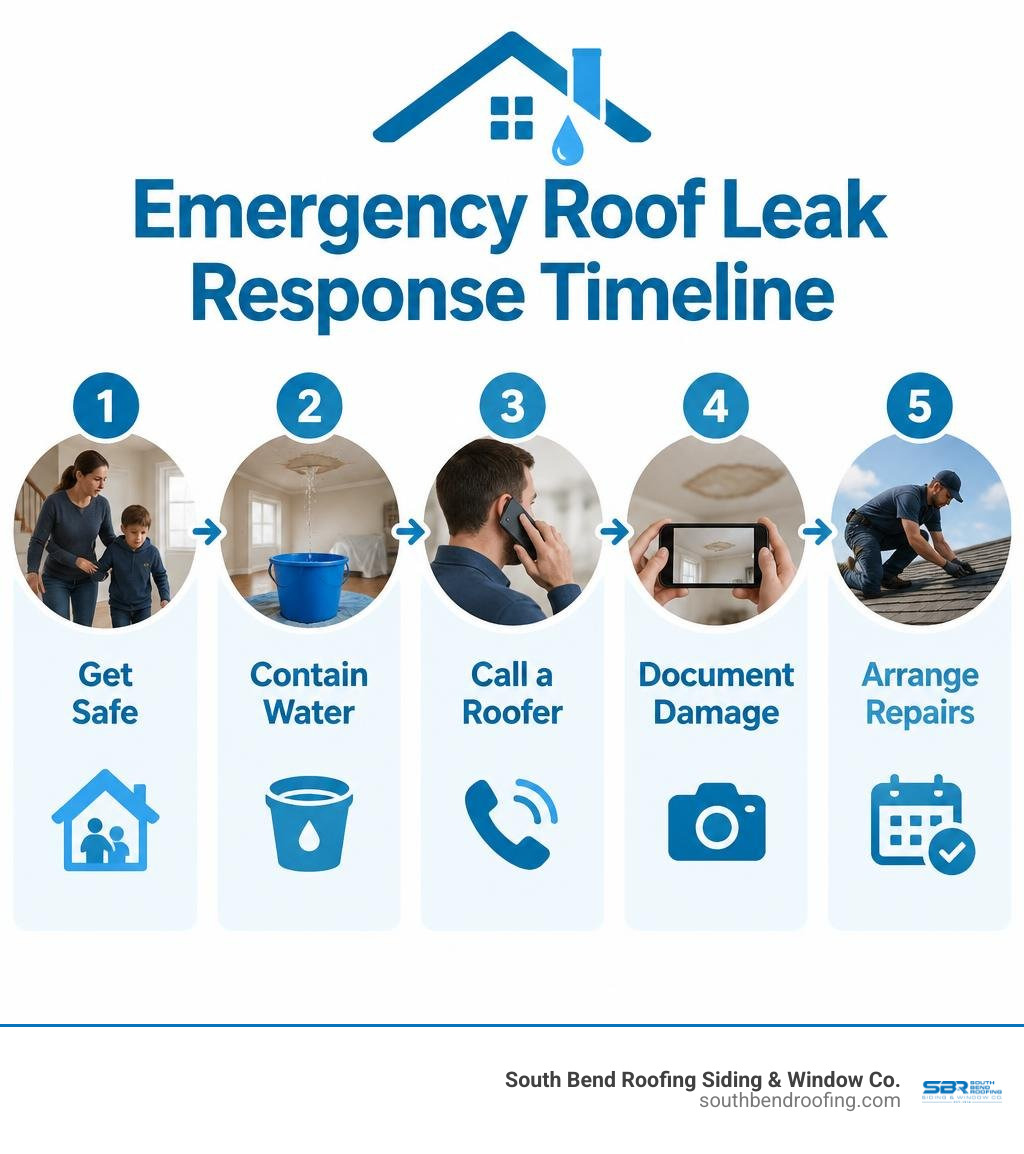
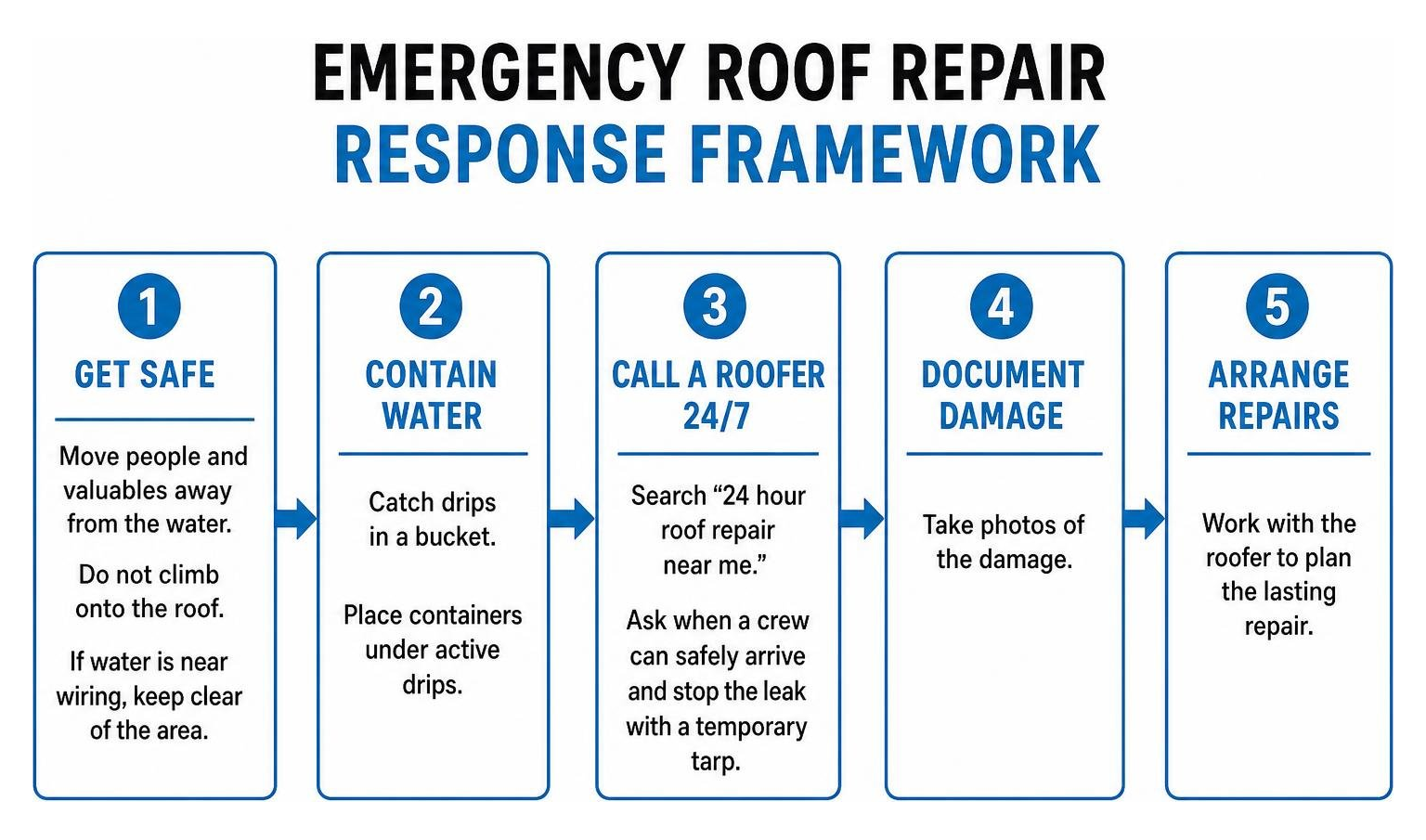
If you're searching for "24 hour roof repair near me," call a local roofing contractor and ask when a crew can safely arrive and whether they can stop the leak with a temporary tarp. While you wait, move people and valuables away from the water, catch drips in a bucket, and take photos of the damage. Do not climb onto the roof. If water is near wiring or a light fixture, keep clear of the area and have the power shut off only if you can do so safely.
I'm James Spillman, Vice President at South Bend Roofing Siding & Window Co. Our company's 110+ years of roofing experience, with roofing work dating back to 1914, informs this guide for anyone searching for "24 hour roof repair near me": how to protect the building now, choose a roofer, and plan the lasting repair. For urgent help, call (574) 288-4764.
We serve residential roofing customers in South Bend, Mishawaka, Elkhart, La Porte, Goshen, Indiana, and Niles, Michigan. Our commercial roofing service area spans Indiana and Michigan, including Indianapolis, Fort Wayne, Lafayette, South Bend/Elkhart, Northwest Indiana communities such as Gary, Hammond, and Merrillville, plus Kalamazoo, Benton Harbor, Niles, New Buffalo, and Three Rivers.
How to Find Trusted 24 Hour Roof Repair Near Me During a Crisis
When water is finding its way through your ceiling at two in the morning, panic is a natural reaction. However, making a rushed hiring decision can turn a manageable leak into a long-term construction nightmare. The roofing industry is large and crowded, so knowing how to quickly identify a legitimate, skilled professional during an urgent crisis is essential.
Your primary goal during an emergency callout is stabilization. You need a contractor with verified credentials who understands local building codes, regional climate vulnerabilities (like heavy lake-effect snow and severe Midwest thunderstorm lines), and immediate triage safety.
Immediate Action Steps Before the Roofer Arrives
While you wait for our emergency dispatch crew to navigate the roads and arrive at your property, taking rapid indoor mitigation steps will minimize structural water damage, rot, and indoor air quality hazards. Left unchecked, moisture intrusion can contribute to mold and other damage.
- Contain the Interior Water Flow: Place heavy-duty plastic buckets, storage bins, or pots directly beneath active drips. If water is splashing onto surrounding flooring, line the containers with old towels or rags to absorb the impact.
- Relieve Ceiling Pressure: If you notice a bulging, water-filled blister forming in your drywall or plaster ceiling, it is holding significant weight that could cause an uncontrolled collapse. Place a large bucket underneath the bulge and carefully puncture the center with a screwdriver or nail. This creates a controlled drainage point and prevents ceiling drywall from tearing away in massive sheets.
- Protect Furniture and Valuables: Move electronics, upholstered furniture, rugs, and sentimental items completely out of the room. If heavy furniture cannot be moved, cover it tightly with plastic drop cloths or trash bags.
- Prioritize Electrical Safety: If water runs down wall cavities or drips through light fixtures, ceiling fans, or electrical outlets, do not touch the switches. Go directly to your main breaker panel and shut off electricity to the affected circuits, provided the path to the panel is completely dry.
- Collect Pre-Mitigation Evidence: Capture clear, well-lit photos and short videos showing the active leak, pooling water, damaged ceilings, and any compromised personal property before you begin cleaning up.
For homeowners facing extensive residential storm damage, contacting our team for specialized residential roofing services ensures that immediate containment transitions smoothly into comprehensive structural restoration.
Red Flags When Searching for 24 Hour Roof Repair Near Me
Severe weather frequently brings out unqualified door-to-door operators who travel from city to city following storm paths. These crews may offer fast fixes, collect payment, and disappear before their shoddy repairs fail during the next rain.
Watch out for these critical red flags when searching for emergency roofers:
- Demanding Full Payment or Large Cash Deposits Upfront: Reputable contractors do not demand 100% payment in cash before setting foot on your property or assessing the roof. Emergency service fees or standard tarping rates should be explained transparently.
- Unmarked Vehicles and Out-of-State Plates: A reliable local roofing specialist maintains branded vehicles, established community roots, verifiable local physical addresses, and clear licensing credentials.
- Aggressive, High-Pressure Sales Tactics: Avoid anyone claiming your roof will collapse within minutes unless you sign an immediate, non-negotiable full-replacement contract on the spot.
- Lack of General Liability and Workers' Compensation Insurance: Roofing is hazardous, especially in emergency conditions. If an uninsured contractor slips and falls on your wet roof, you could face severe personal liability. Always verify active coverage.
- Refusal to Provide Written Line-Item Estimates: Never accept verbal price tags. Legitimate technicians supply detailed, itemized write-ups outlining materials, labor rates, and temporary versus permanent work scopes.
What Counts as a True Roofing Emergency vs. Routine Maintenance
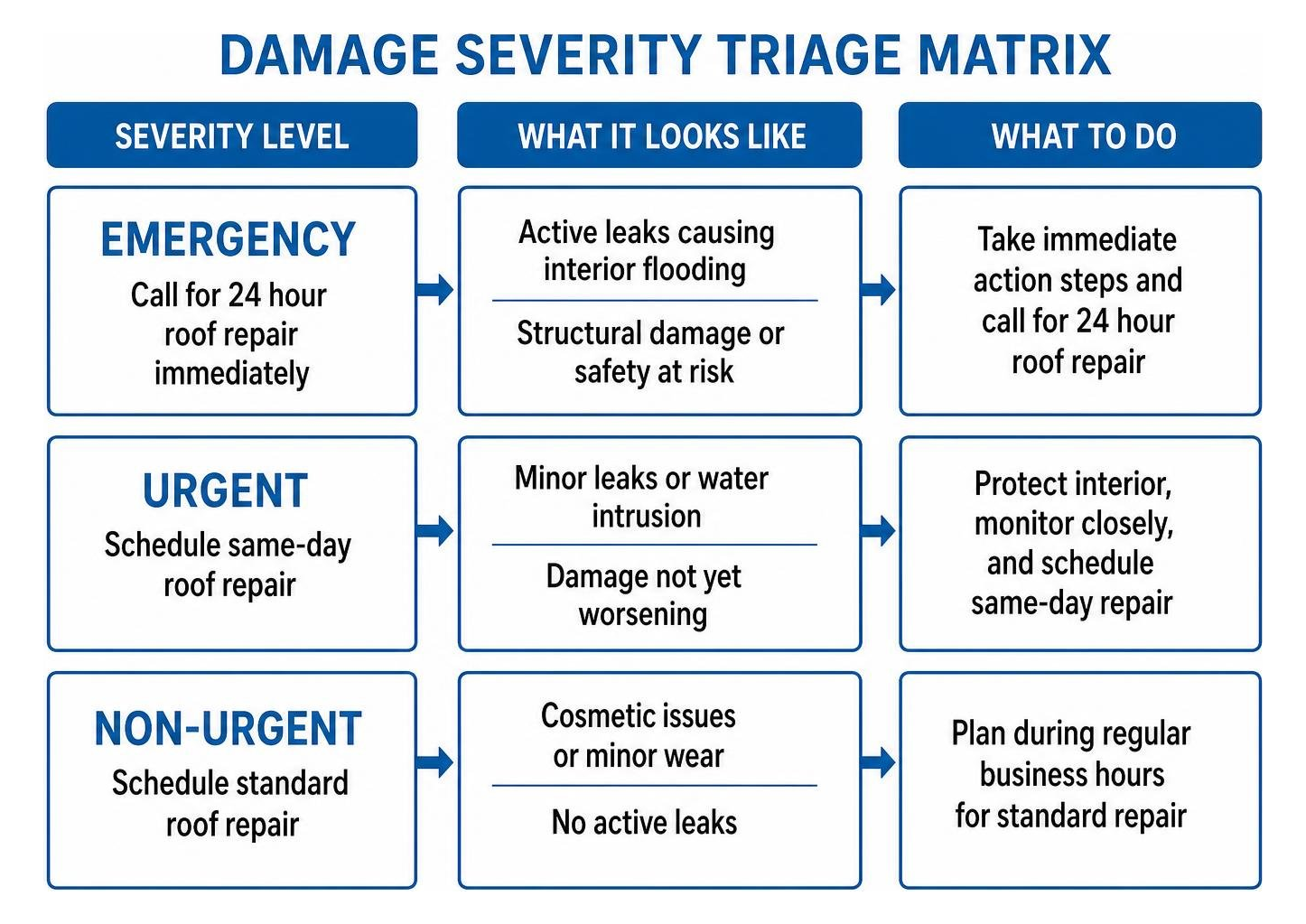
Not every roof imperfection requires paying premium overtime rates for a 3:00 AM emergency dispatch. Differentiating between an urgent structural crisis and a repair that can wait for standard daylight operating hours helps you manage stress and avoid unnecessary service fees.
Identifying Severe Structural and Water Hazards
A true roofing emergency exists when the building envelope is breached to the point that living spaces are actively flooding, structural framing is compromised, or occupant safety is in immediate jeopardy.
- Fallen Tree Limbs or Impact Punctures: A heavy branch puncturing the roof decking leaves an open hole exposed to outside elements.
- Active, Uncontrolled Water Deluges: Streams of water pouring into living rooms, kitchens, or down interior wall cavities that cannot be controlled by a single bucket.
- Sagging or Bowing Roof Decking: Visible dips in the roofline or ceiling drywall indicating framing failure, saturated materials, or compromised rafters.
- Extensive Shingle Blow-Off During Active Downpours: Large sections of missing shingles exposing raw plywood decking or underlayment to torrential rainfall.
In contrast, routine issues—such as isolated surface moss growth, a small drip in an unfinished attic captured easily in a pail, or localized granular loss on older shingles—can safely be scheduled during standard weekday inspection windows.
| Issue Characteristic | Emergency Dispatch (Immediate 24/7 Response) | Routine Maintenance (Standard Business Hours) |
|---|---|---|
| Water Intrusion Rate | Active pouring, streaming through drywall/fixtures | Minor intermittent drip, slight damp spot in attic |
| Structural Integrity | Punctured decking, sagging ceiling, tree impact | Intact decking, superficial shingle curling/aging |
| Safety Hazards | Water contacting active electrical circuits | Dry electrical lines, cosmetic exterior blemishes |
| Weather Conditions | Active torrential rain, high wind, severe hail | Clear forecast, mild seasonal conditions |
| Interior Impact | Flooding living areas, threatened interior finishes | Contained moisture, no immediate threat to drywall |
Can Emergency Roof Repairs Be Done in Bad Weather?
One of the most frequent questions we receive during severe weather events is whether roofers can fix leaks while the storm is still raging.
The short answer is yes for emergency containment (tarping and temporary sealing), but no for permanent repairs.
Professional roofing technicians will not climb onto a roof during active lightning, severe gale-force winds exceeding safe ladder thresholds, or extreme ice events where footing is impossible. Doing so poses fatal fall hazards. However, as soon as extreme winds subside and lightning clears—even if it is still steadily raining—trained crews equipped with safety harnesses, ropes, and specialized fall-arrest equipment can access the roof to deploy emergency tarps, sandbags, and temporary sealants.
Permanent repairs (installing new asphalt shingles, flashing, or low-slope membrane patches) require completely dry substrates. Roofing adhesives, self-adhering underlayments, and asphalt bonding strips cannot adhere to wet surfaces. Attempting permanent shingle installation on waterlogged wood decking traps rot-inducing moisture directly inside your roofing system.
The Emergency Roof Tarping Process and Long-Term Solutions
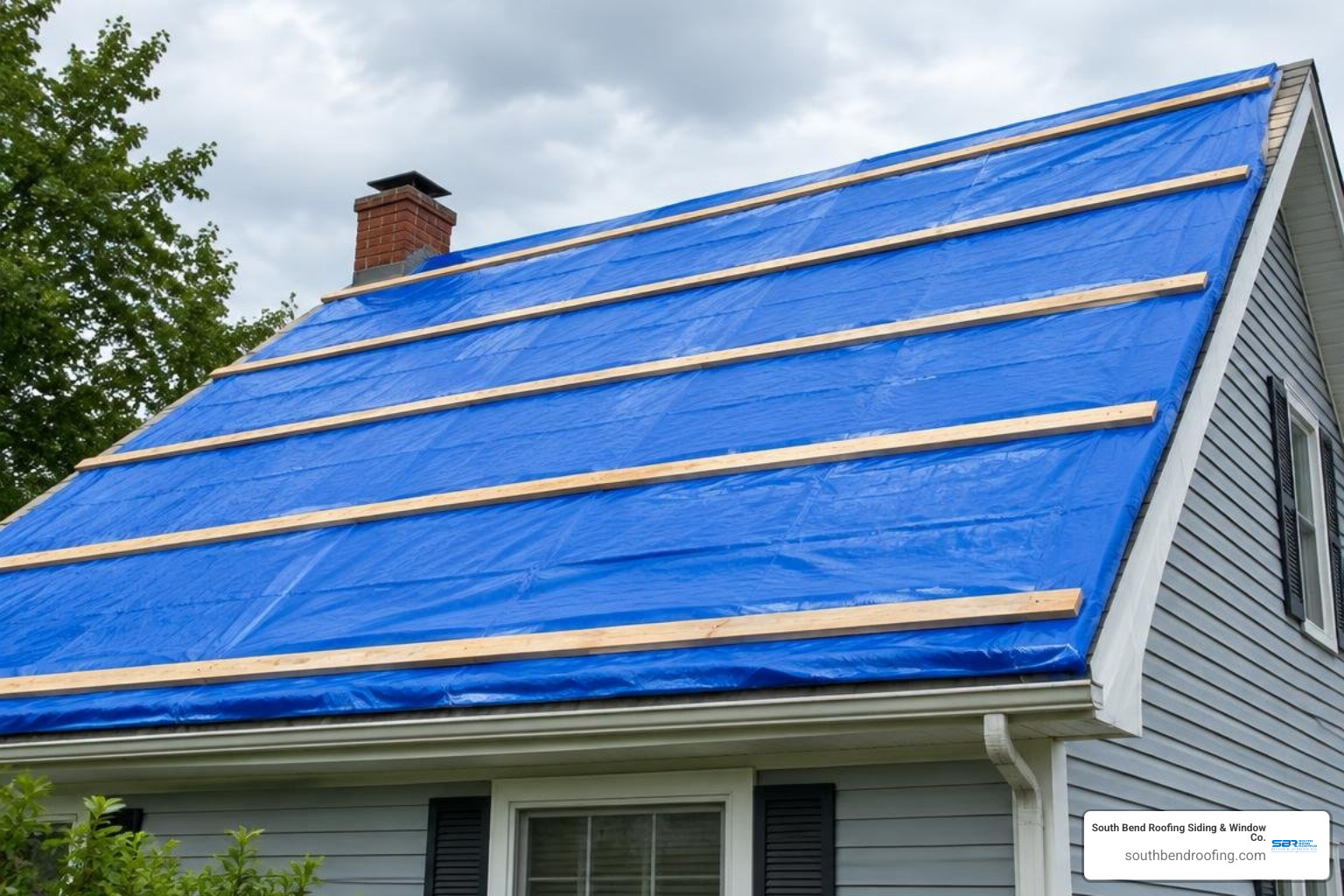
Emergency roof tarping is the gold standard for rapid storm triage. It halts active water intrusion immediately, protecting your home's structural framing, drywall, electrical wiring, and personal belongings until weather conditions permit permanent restoration.
How Professional Tarp Deployment Protects the Structure
Deploying an emergency tarp is not as simple as throwing a lightweight blue sheet over your shingles and weighing down the corners with loose bricks. Improperly installed tarps can tear off in the next gust of wind or channel water directly underneath the shingles, making the leak worse.
A professional emergency tarping crew follows precise structural protocols:
- Damage Perimeter Assessment: The technician identifies the exact origin of the leak, clearing away loose debris, broken tree limbs, and fractured shingles.
- Proper Tarp Sizing: The tarp must extend at least 3 to 4 feet past the damaged perimeter on all sides. Crucially, the top edge of the tarp must be wrapped over the roof's peak (ridge) whenever possible to prevent water running down the slope from slipping beneath the upper edge.
- Securing with Wooden Anchor Battens: Heavy-duty, UV-resistant, woven polyethylene tarps are fastened using 1x2 or 2x4 wooden battens. Screws or specialized roofing nails are driven through the wood strips and into the tarp edges. This sandwiches the fabric firmly against the roof deck, distributing tension evenly and eliminating wind catch points that tear unsecured tarps away.
- Perimeter Sealing: Lower edges and vertical seams are secured flush along water drainage channels, ensuring that rain flows cleanly over the tarp and away from vulnerable openings.
A professionally installed emergency tarp can protect a home while reports, insurance adjuster evaluations, and permanent material deliveries are finalized.
Transitioning from Emergency Tarping to Permanent Repair
Tarping is an indispensable shield, but it remains a temporary fix. Once the storm cycle passes and the structure is stabilized, the permanent restoration phase begins.
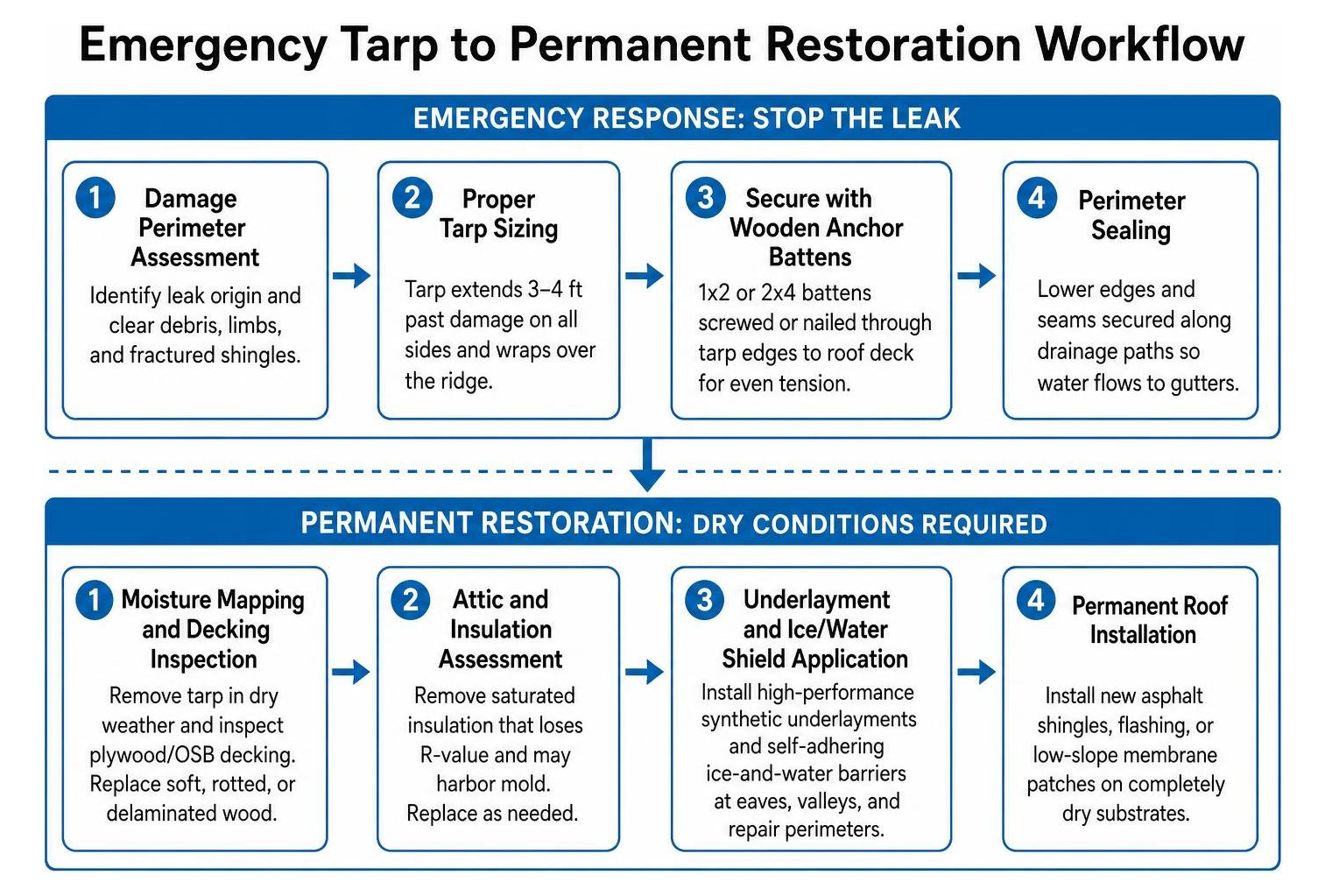
Transitioning to a permanent solution involves:
- Moisture Mapping and Decking Inspection: Technicians remove the temporary tarp during dry weather and check the plywood or OSB decking beneath. Soft, rotted, or delaminated wood must be cut away and replaced with fresh structural panels.
- Attic and Interior Assessment: Water-damaged building materials should be evaluated so hidden moisture does not continue affecting ceilings, wall cavities, or indoor air quality.
- Underlayment and Ice/Water Shield Application: High-performance synthetic underlayments and self-adhering ice-and-water barriers are installed across vulnerable eaves, valleys, and repair perimeters.
- Matching and Installing Premium Materials: Whether repairing CertainTeed asphalt shingles, standing seam metal roofing, or low-slope commercial systems such as PVC roofing from Duro-Last, TPO roofing, or EPDM roofing, matching the right material to the building ensures durable weather protection.
To determine whether your property requires targeted patching or a broader structural overhaul following severe weather, read our comprehensive roof repair or replacement guide. For business properties, warehouses, and flat roofs requiring specialized single-ply solutions like Duro-Last membrane roofing, explore our advanced commercial roofing services.
Navigating Emergency Repair Costs and Insurance Claims

Discovering an unexpected roof leak is stressful enough without worrying about surprise financial hits. Understanding how emergency pricing is structured and knowing how to handle your property insurance claim removes uncertainty and speeds up financial recovery. For comprehensive guidance on protecting your financial assets before and after severe weather strikes, review federal resources on how to Document and Insure Your Property.
What Affects Emergency Tarping and Labor Costs
Emergency services involve rapid technician dispatch, hazardous wet-weather labor, and round-the-clock staffing. The final scope depends on factors such as roof pitch, accessibility, damage square footage, materials required, and whether the work is temporary stabilization or a permanent repair.
Common emergency roofing work may include:
- Emergency Tarp Deployment: Temporary containment for storm openings, missing shingles, or punctured roof areas.
- Minor Emergency Leak Repairs: Non-structural interventions such as resealing split pipe boot flashing, replacing missing ridge cap shingles, or addressing small flashing failures.
- Major Structural Emergency Repairs: Storm damage involving broken rafters, punctured decking, or broad underlayment replacement.
- Full Roof Replacement After Severe Storms: When widespread wind or hail damage makes repair impractical, a complete tear-off may be the most reliable solution.
A trustworthy contractor will explain the immediate stabilization work, the permanent repair options, and any applicable manufacturer warranty coverage and workmanship warranty coverage before the project proceeds.
Documenting Roof Damage for a Seamless Insurance Claim
Many standard homeowners insurance policies cover sudden and accidental damage caused by severe weather events, windstorms, hail, and fallen trees. Furthermore, many policies contain a "duty to mitigate loss" clause. This clause requires the policyholder to take reasonable, immediate action to prevent secondary water damage—making emergency professional tarping a mitigation step that may be eligible under your claim.
Follow these critical steps to ensure your insurance claim is documented smoothly:
- Notify Your Carrier Immediately: File your claim promptly after discovering storm damage. Obtain your official claim number and the name and contact details of your assigned adjuster.
- Retain All Emergency Invoices and Receipts: Keep itemized copies of your roofer’s emergency tarping invoice, dispatch fees, and any supplies purchased (such as buckets or drop cloths). These receipts demonstrate responsible mitigation and can be submitted with your claim documentation.
- Capture Detailed, Date-Stamped Visuals: Take wide shots showing the exterior roof slope, close-ups of cracked or missing shingles, photos of the fallen tree or debris, and clear images of interior ceiling stains, ruined carpets, or damaged furniture.
- Request an Itemized Contractor Assessment: Ensure your roofing specialist provides a comprehensive damage report detailing damaged squares, flashing compromises, decking saturation, and required code-upgrade items.
- Coordinate On-Site Adjuster Meetings: Have your local roofing contractor present when the insurance adjuster conducts their physical inspection. Professional roofers can point out subtle hail bruising, lifted nail heads, and creased shingle mats that are easy to overlook.
To verify that your home or commercial building falls within our regional rapid-response perimeter across northern Indiana and southwestern Michigan, check our active service areas.
Frequently Asked Questions About Emergency Roof Repairs
How Quickly Can an Emergency Roofer Respond?
Emergency dispatch depends heavily on real-time weather conditions, road safety, and whether an active local storm system is causing widespread regional emergencies. Our emergency response protocols prioritize triage as conditions allow, with the initial goal of securing the property against ongoing interior water loss.
Will My Homeowner's Insurance Cover Emergency Tarping?
Yes, in many storm-related claims. Insurance carriers often categorize professional emergency tarping and temporary water mitigation as necessary steps to protect the property from worsening mold, drywall rot, and structural decay. Always retain your contractor’s itemized tarping invoice and detailed photo reports to submit alongside your primary claim documentation.
How Long Can an Emergency Roof Tarp Stay in Place?
A professionally installed, heavy-duty emergency tarp secured with wooden battens is designed as a temporary protective measure, not a permanent roof. You should schedule permanent shingle, flashing, or membrane repairs as soon as weather conditions stabilize and insurance adjusters complete their assessments to prevent long-term moisture buildup beneath the cover.
Conclusion
Discovering an active roof leak is one of the most stressful challenges a property owner can face. Water moving through your ceilings threatens structural framing, electrical networks, finished surfaces, and cherished personal belongings. However, understanding what to expect from an emergency callout—from containing indoor water and avoiding unqualified crews to securing professional batten-anchored tarping and navigating insurance claims—puts you back in control of the situation.
With 110+ years of trusted local construction and roofing heritage throughout Indiana and Michigan, and roofing work dating back to 1914, South Bend Roofing Siding & Window Co. delivers prompt emergency stabilization and enduring roofing craftsmanship. Our residential roofing services include roof replacement and tear-offs with old roofing removed down to the deck, decking inspection and repair, roof repair, re-roofing, new construction roofing, free roof inspections and written estimates, certified CertainTeed asphalt shingle installation, standing seam metal roofing, and manufacturer warranty coverage plus South Bend Roofing’s own Workmanship Warranty, with details explained by our team.
For business properties, our commercial roofing services include full roof replacement, partial roof replacement, leak and storm-damage repairs, puncture and open-seam repairs, flashing repairs, roof maintenance programs with scheduled inspections and minor repairs, PVC roofing as a Duro-Last contractor, TPO roofing, and EPDM roofing. Work is scheduled around business operations to keep disruption to a minimum.
If you are dealing with active storm damage or need rapid property triage, contact our dispatch team to protect your home or building. Learn more about our comprehensive 24-hour emergency roof restoration services, then call (574) 288-4764 for a free roof inspection and written estimate.