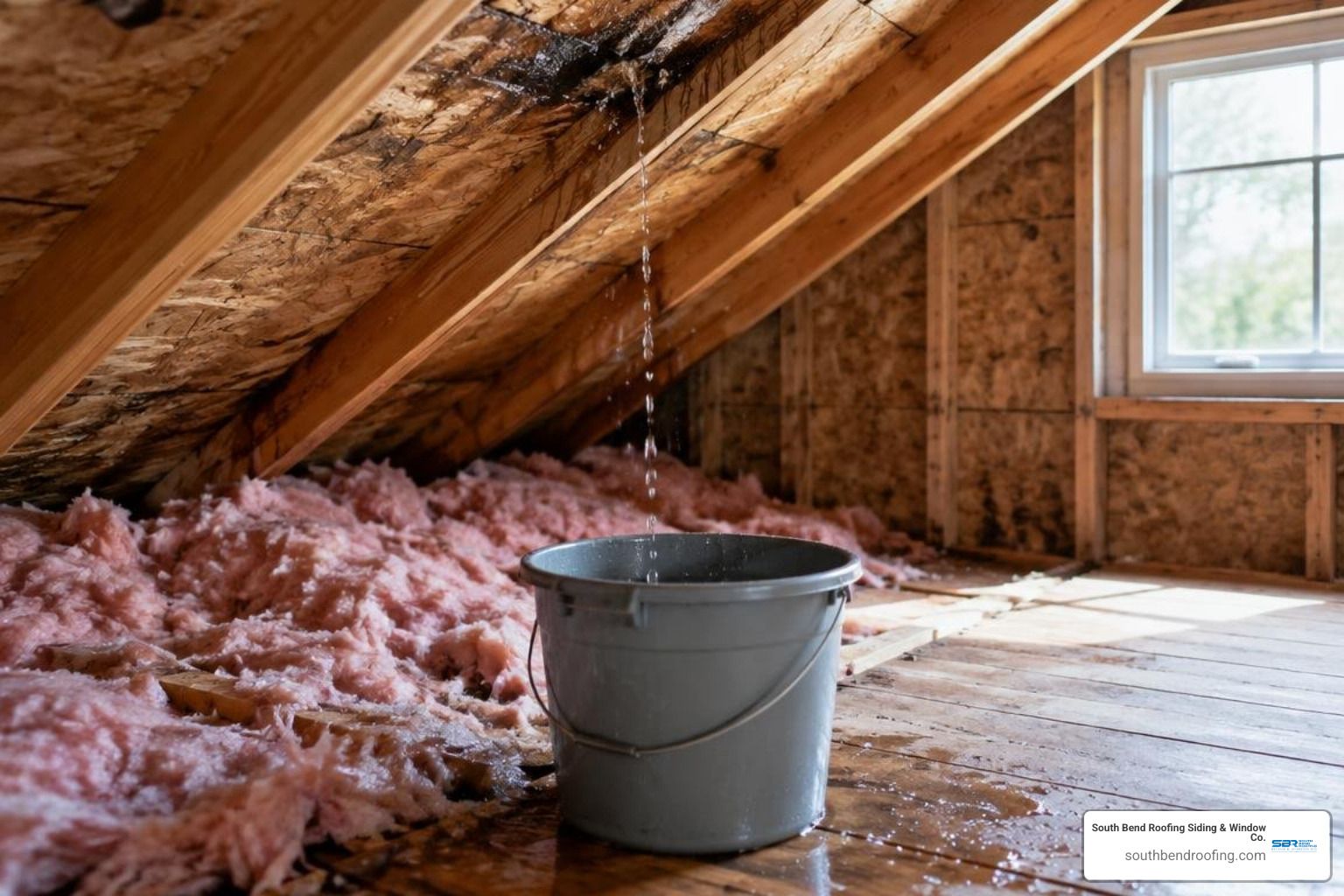
What a Metal Roof Membrane Does
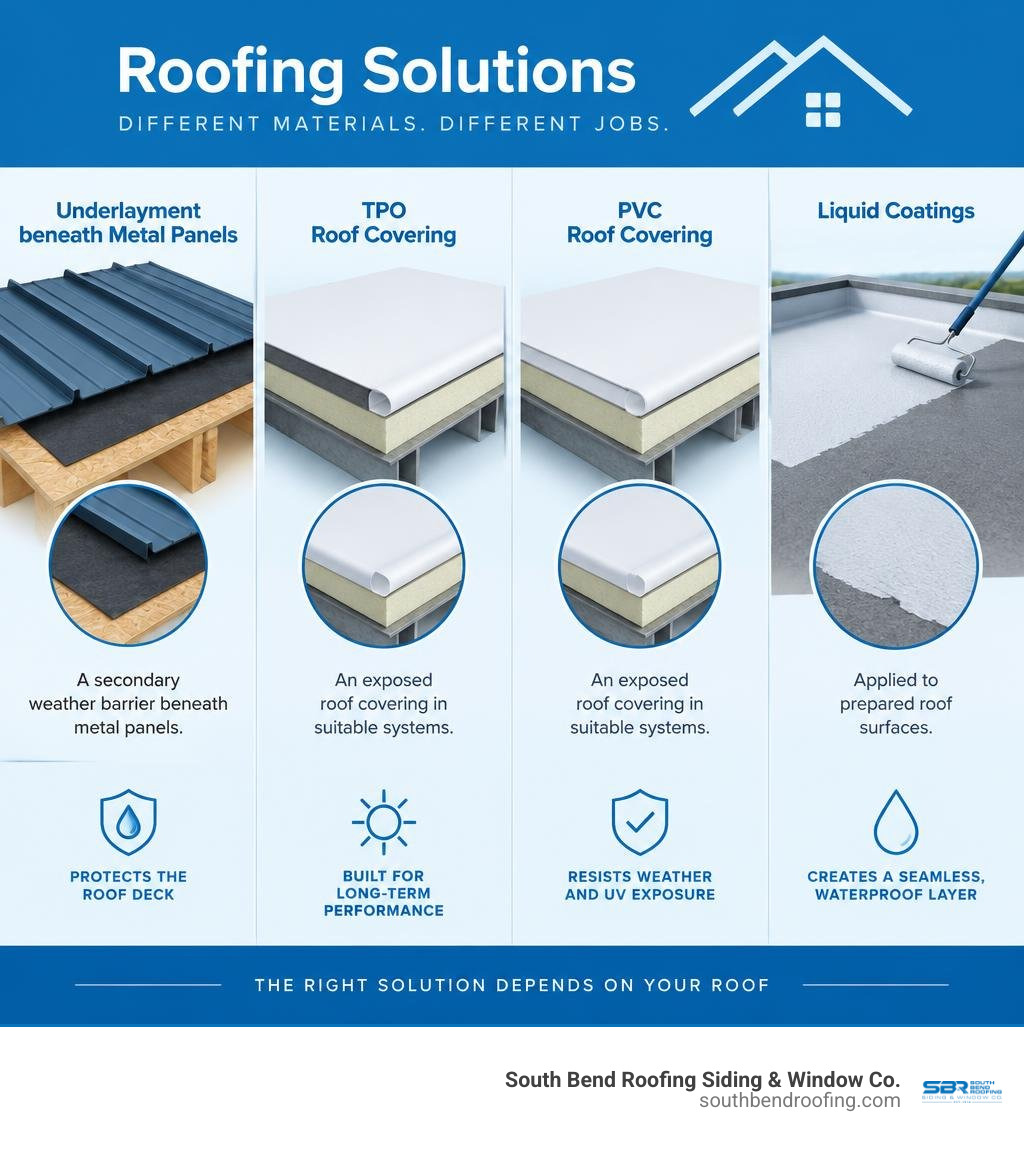
A metal roof membrane usually means the underlayment beneath metal panels. It acts as a backup barrier, helping keep wind-driven rain and melting snow off the roof deck. TPO and PVC are different: they serve as exposed roof coverings in suitable commercial systems. These options solve different problems, so the first question is whether you need protection beneath new metal panels or a different type of roof covering for an existing roof.
I'm James Spillman, vice president at South Bend Roofing Siding & Window Co. My work on roofing projects across Indiana and Michigan has taught me that choosing a metal roof membrane starts with knowing where it belongs in the roof system.
Understanding the Role of Underlayment and the Metal Roof Membrane
When we install a standing seam metal roof, the exterior metal panels are the primary defense against rain, sleet, snow, and sunlight. However, no exterior panel system exists in isolation. The underlayment beneath those panels serves as a vital secondary weather barrier, ensuring that the roof assembly remains watertight over decades of harsh seasonal weather.
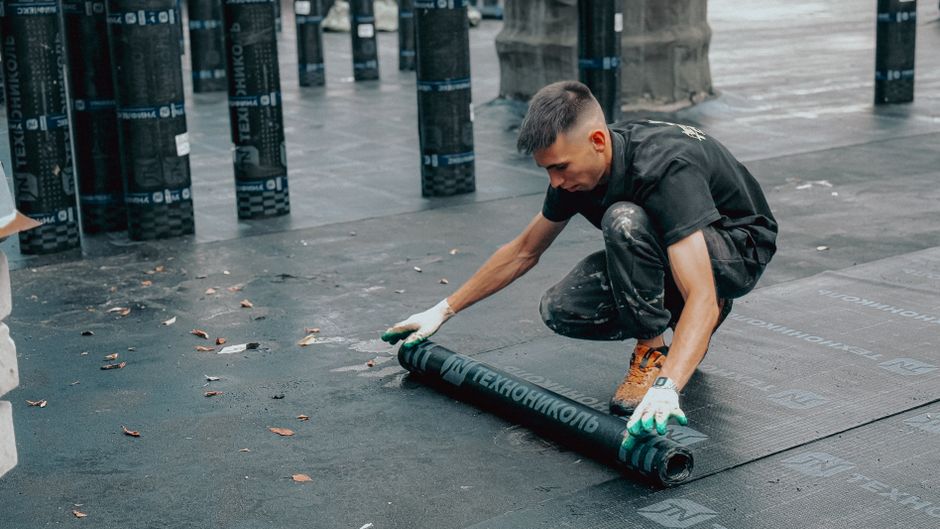
A quality membrane underlayment fulfills several critical roles:
- Secondary Waterproofing: Wind-driven rain and capillary action can push microscopic moisture past panel laps or fastener points. The membrane stops this water before it reaches the wood substrate.
- Condensation Management: Metal panels heat up rapidly in the sun and cool quickly at night. This thermal swing creates condensation on the underside of the panels. The underlayment prevents this moisture from soaking into the roof deck.
- Ice Dam Defense: In northern Indiana and southwest Michigan, winter freeze-thaw cycles frequently create ice dams at eaves and valleys. Specialized self-adhering membranes seal around fasteners to keep backed-up meltwater out of the home.
- Friction Reduction: As metal panels expand and contract with changing outdoor temperatures, they move across the roof deck. The underlayment prevents abrasive friction between the panel backs and the wood sheathing.
- Fire and Air Barrier Performance: Premium membranes contribute to Class-A fire ratings and create an airtight seal that improves the building envelope's thermal efficiency.
When planning residential upgrades through our residential roofing services, ensuring your roof deck substrate is sound and protected by the right membrane is the foundational step toward lasting performance.
Comparing Underlayment Types and Metal Roof Membrane Technologies
Underlayment technology has evolved dramatically from basic asphalt-saturated organic felts to advanced polymers and multi-layer composites. Choosing the right material requires evaluating walkability during installation, tear resistance, tensile strength, high-temperature tolerance, and moisture permeability.
| Underlayment Type | High-Temp Rating | Lifespan Expectation | Moisture Vapor Permeability | Relative Cost | Primary Best Use |
|---|---|---|---|---|---|
| Traditional Asphalt Felt (#30) | Low to Moderate (up to 150°F) | Shorter than metal panels | Non-breathable | Budget-friendly | Temporary or basic utility applications |
| Synthetic Polymer Sheet | High (typically 220°F to 240°F) | Excellent (matches panel life) | Water barrier (vapor tight) | Moderate | Field areas on steep-slope metal roofs |
| High-Temp Self-Adhering (SA) | Exceptional (up to 250°F+) | Maximum durability | Impermeable air/vapor barrier | Premium | Eaves, valleys, penetrations, and low slopes |
| Triple-Layer Breathable Sheet | High (engineered polymer) | Long-term performance | Highly breathable (micro-porous) | Moderate to High | Unvented roof decks or moisture-sensitive attics |
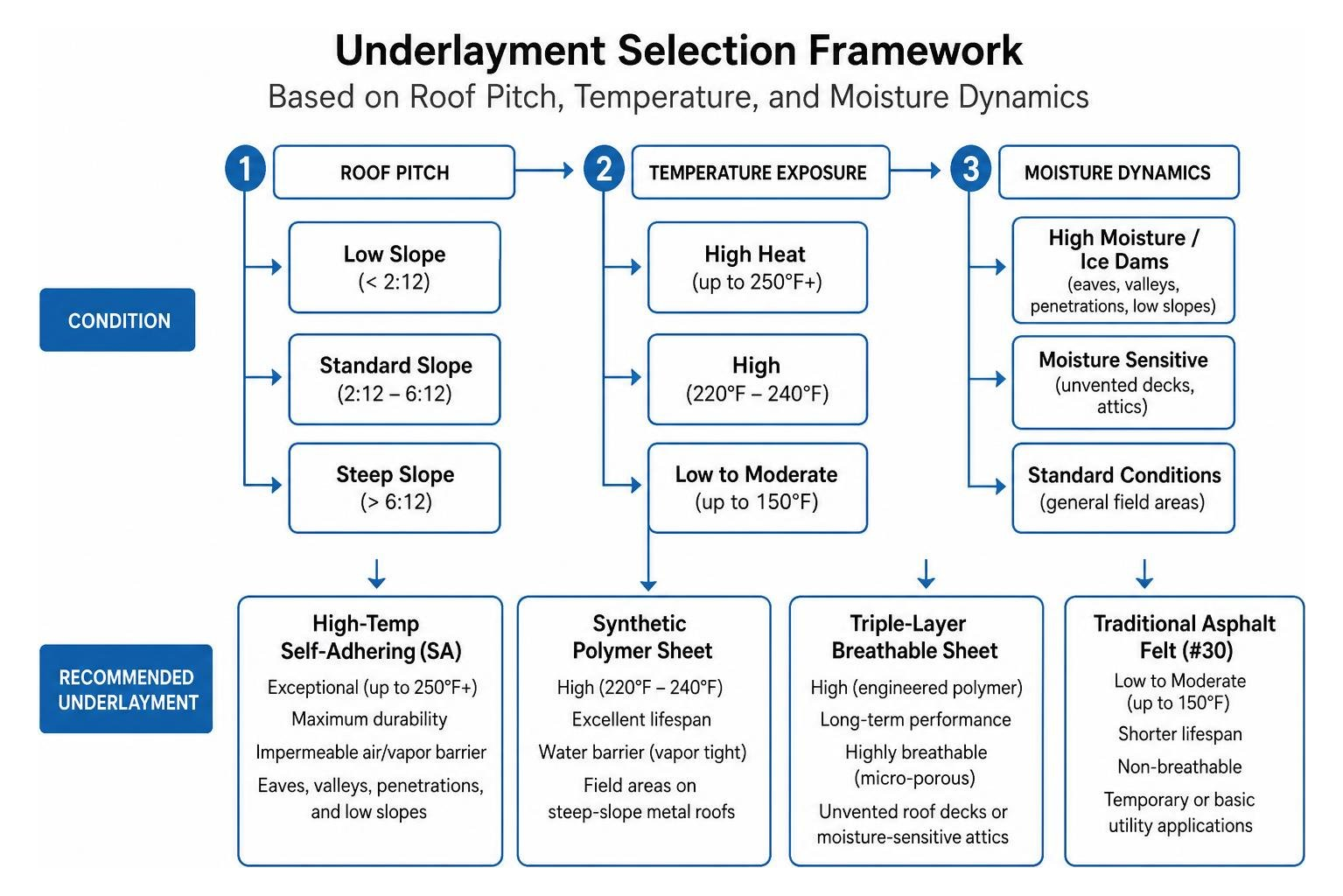
Traditional Felt vs. Synthetic Metal Roof Membrane Sheets
Traditional asphalt-saturated felt was once the standard for steep-slope roofs. While it remains a familiar product, it presents significant drawbacks beneath metal panels. Felt is made of organic paper or fiberglass mats soaked in asphalt. Under the intense radiant heat generated beneath dark metal panels, the volatile oils in asphalt felt dry out, making the material brittle. Over time, felt is likely to fail long before the metal roof itself reaches the end of its functional life.
Synthetic sheet underlayment has become the modern standard for field installations. Woven from high-density polyethylene (HDPE) or polypropylene and laminated with a protective polymer coating, synthetic sheets offer major advantages:
- Tear Strength and Tensile Durability: Synthetic membranes resist heavy foot traffic and high winds during construction without ripping or stretching.
- UV Exposure Tolerance: While felt degrades quickly when exposed to sunlight, premium synthetic underlayments can withstand direct UV exposure for months during construction delays.
- Moisture Resistance: Synthetics do not absorb water, rot, or buckle when wet, providing a flat, stable surface for panel installation.
When completing comprehensive roof replacement and tear-offs, upgrading from deteriorated organic felt to a high-tensile synthetic underlayment ensures the decking beneath remains dry for the life of the new panels.
High-Temperature Self-Adhering Metal Roof Membrane Options
Self-adhering (SA) membranes, often referred to as "peel-and-stick" underlayments, use rubberized asphalt or polymer-modified bitumen backed with a split-release film. Because metal panels absorb significant solar radiation, standard residential ice-and-water membranes can soften, slide, or bleed onto facias under high heat. High-temperature self-adhering membranes are specifically formulated to withstand continuous temperatures up to 250°F.
A prime example of this engineering is the Hydraguard Dual Pro self-adhered membrane. Reinforced with a fiberglass mat and a high-strength polyester surface, this membrane provides:
- A high-temperature rating engineered for environments reaching 250°F.
- An approved UV exposure rating of up to 90 days prior to final metal panel fastening.
- A maximum tensile load of 4.4 kN/m and a tear resistance of 89 N under ASTM D5147 standards.
- SEALLap® adhesive chemistry that bonds side laps tightly without separate adhesive applications.
Another leading option for continuous high-performance protection is the CLAD-GARD SA underlayment specifications. Designed for direct application to plywood and OSB decking, it combines rubberized asphalt waterproofing with advanced traction surfaces. When installed as part of an integrated roof assembly, it is eligible for manufacturer warranty coverage; our team will explain the specific details during your consultation.
Breathable Membranes and Vapor Permeability
While self-adhering membranes create an impermeable barrier against external water, certain roof designs require moisture vapor from inside the building to escape. In specialized warm-roof assemblies or historic renovations with unvented attics, trapping indoor humidity beneath a non-breathable underlayment can lead to condensation under the roof deck.
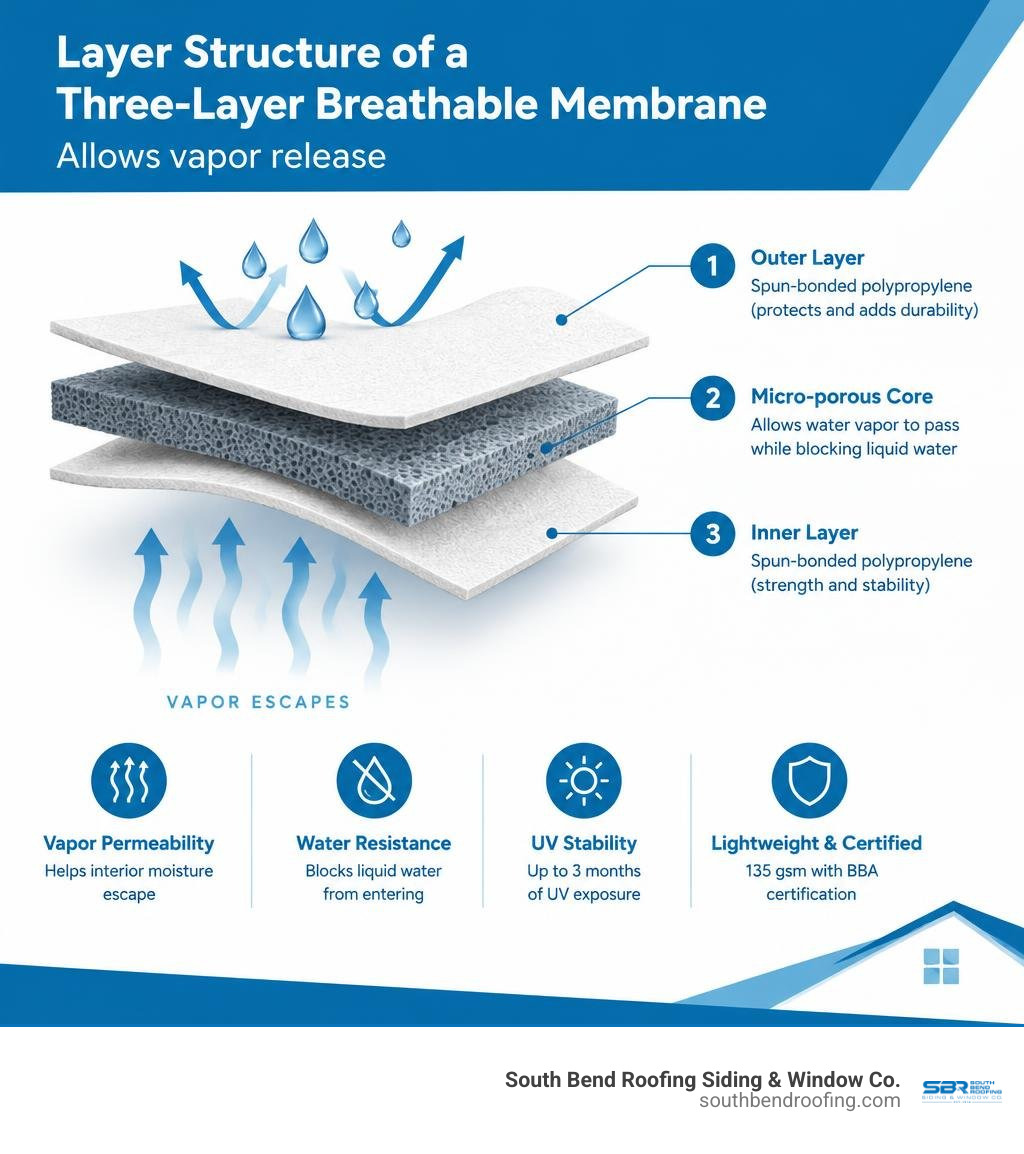
This is where breathable breather membranes excel. The Vent3 breathable membrane technical data highlights how triple-layer technology works:
- Construction: Spun-bonded polypropylene outer layers encase a micro-porous polypropylene core.
- Vapor Management: It features a water vapor resistance of 0.16 MNs/g, allowing interior moisture vapor to escape freely while blocking liquid water droplets from penetrating inward.
- Physical Properties: Weighing 135 gsm, it offers UV stability for up to 3 months from installation and holds British Board of Agrément (BBA) certification for supported and unsupported roof applications.
Using a breathable membrane ensures that internal household humidity does not stay trapped against structural rafters, mitigating mold growth and structural decay.
Key Selection Criteria: Climate, Temperature, and Energy Efficiency
Selecting the right membrane requires balancing environmental conditions, building geometry, and energy performance goals.

- Climate and Snow Load: In regions with heavy winter snowfall and freezing temperatures, ice dams are a constant risk. Self-adhering rubberized membranes should be installed along all eaves (extending at least 24 inches past the interior warm wall line), valleys, rakes, and around roof penetrations like chimneys and soil pipes.
- Roof Slope and Geometry: Low-slope metal roofing assemblies require more robust waterproofing because water drains more slowly. For steep slopes, slip resistance and walkability are critical for installer safety.
- Thermal Expansion and Heat Exposure: Darker metal finishes absorb substantial radiant heat. If your roof design uses dark bronze or black standing seam panels, high-temperature membranes rated to at least 240°F–250°F are essential to prevent the underlayment compound from degrading.
- Energy Efficiency and Building Envelope Integrity: Air leakage through roof decks accounts for significant heating and cooling loss. A continuous, fully adhered self-adhering membrane functions as both a waterproofing layer and an effective air barrier, helping stabilize indoor temperatures.
For business owners evaluating flat or low-slope properties alongside residential assets, our commercial roofing services utilize complementary single-ply membranes such as Duro-Last PVC, TPO, and EPDM to provide seamless protection tailored to commercial standards.
Installation Best Practices for Self-Adhered and Synthetic Underlayments
Even the most advanced membrane will underperform if it is installed improperly. Adhering to verified installation practices guarantees that the roof remains watertight for decades.
- Deck Preparation: The wood deck (plywood or OSB) must be clean, dry, and free of dust, loose fasteners, or old roofing debris. Moisture on the deck will compromise the initial bond of self-adhering membranes.
- Temperature During Application: Self-adhering products have distinct adhesive properties depending on ambient temperatures. For example, testing on Hydraguard Dual Pro shows adhesion to plywood of 2.0 lbf/ft at 40°F, rising to 12.0 lbf/ft at 75°F. On colder days, keeping rolls warm before installation ensures optimal initial tack.
- Overlap Dimensions: Always maintain manufacturer-specified lap widths—typically a minimum of 3 inches for side laps and 6 inches for end laps.
- Mechanical Fastening & Back-Nailing: On steep pitches, back-nail the selvage edge with approved ring-shank nails or roofing fasteners with plastic caps to prevent slippage while the adhesive cures.
- Pressure Application: After placing a self-adhered sheet, roll the surface with an 80-lb or 50-lb split-steel weighted roller. Rolling pushes out air bubbles and forces the rubberized compound into direct contact with the wood substrate.
- Sealing Laps and Penetrations: Apply compatible roofing mastic or flashing cement at end laps, valleys, and around flashing boots to reinforce transitions.
You can view examples of our completed standing seam installations and detailed flashing work in our project gallery.
Frequently Asked Questions About Metal Roof Membranes
What is the primary purpose of underlayment beneath a metal roof?
Underlayment acts as a secondary water barrier beneath the metal panels. It protects the structural roof deck from wind-driven rain, prevents panel condensation from rotting the wood sheathing, reduces thermal movement friction, and guards against moisture intrusion caused by winter ice dams.
Which underlayment performs best in high-temperature environments?
High-temperature self-adhering membranes and high-grade synthetic polymer sheets perform best. Products like Hydraguard Dual Pro and CLAD-GARD SA are specifically engineered with heat-stabilized compounds rated up to 250°F, preventing the adhesive from liquefying or breaking down under hot metal panels.
How do breathable membranes benefit a metal roofing system?
Breathable membranes like Vent3 feature micro-porous layers that allow moisture vapor generated inside the building to escape into the exterior ventilation space. This prevents moisture accumulation on the underside of the roof deck, reducing the risk of mold growth, wood rot, and degraded structural framing in unvented roof configurations.
Protecting Your Metal Roofing Investment
A standing seam metal roof is one of the most durable investments you can make for your home, but the system's long-term success depends heavily on the membrane hidden beneath the panels. Choosing between high-temperature self-adhering sheets, premium synthetics, or breathable underlayments requires understanding your home's roof pitch, local winter weather patterns, and ventilation design.
Since 1914, South Bend Roofing Siding & Window Co. has provided reliable residential and commercial roofing across northern Indiana and southwest Michigan. Our certified installers ensure every layer—from the wood decking up to the ridge cap—is built for longevity and backed by our Workmanship Warranty and manufacturer warranty coverage. Our team will explain the specific details of your warranty options during your consultation.
If you are considering a new metal roof or need an honest evaluation of your existing roofing system, contact the experienced team at South Bend Roofing Siding & Window Co. today.
Call South Bend Roofing Siding & Window Co. at (574) 288-4764 to schedule your free roof inspection and written estimate.