
How to Choose Roof Repair or Replacement
A roof usually needs repair when damage is localized and the underlying materials remain sound. Choose full replacement when shingles are failing across broad areas, the roof is near the end of its service life, or leaks and weather damage have affected the deck, insulation, or structure. A professional inspection confirms the safest option.
What signs mean your roof needs attention?
Some roof problems are easy to see from the ground, while others appear inside your home. Look for these warning signs:
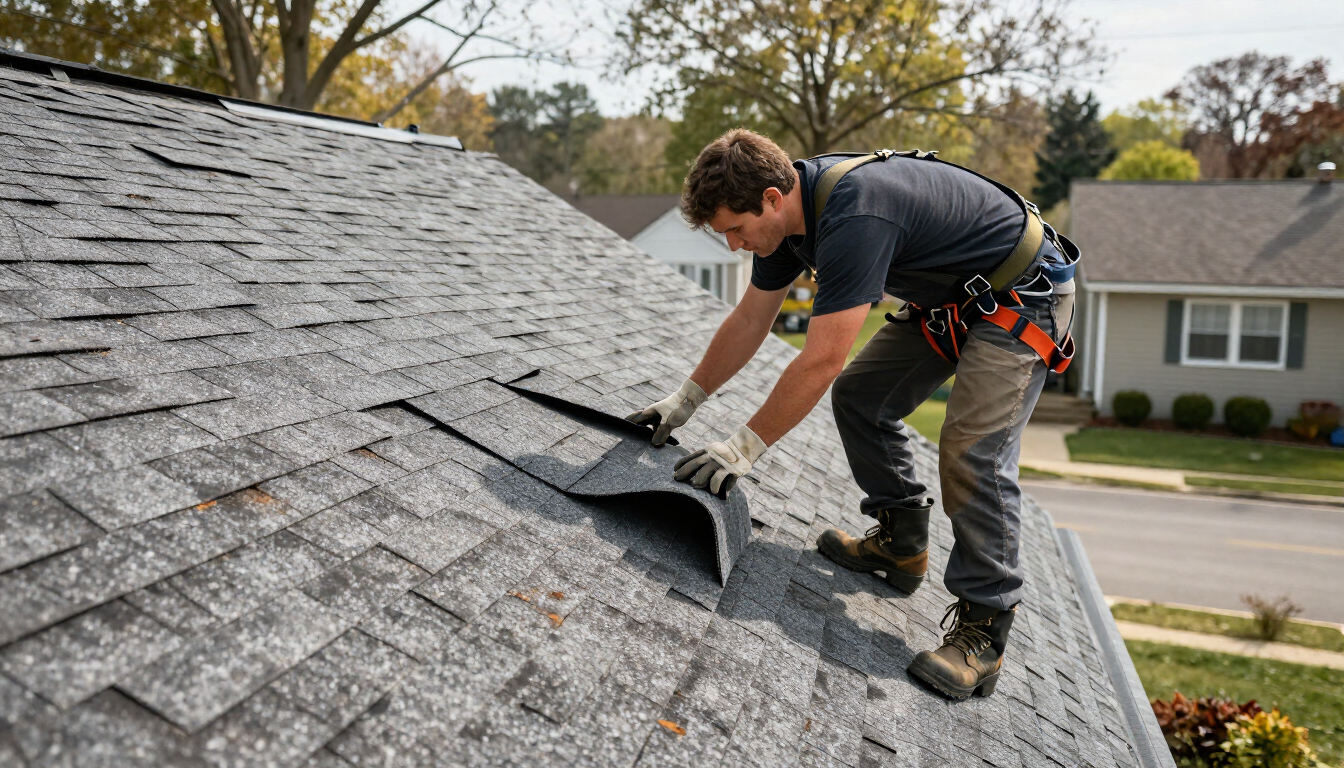
- Curling, cracked, or missing shingles: Shingles that curl at the edges, crack across the surface, or disappear after wind indicate weathering or storm damage.
- Granules in gutters: Asphalt shingles shed protective granules as they age. A small amount may be normal, but heavy accumulation suggests the shingles are losing their weather barrier.
- Leaks or ceiling stains: Water spots on ceilings, damp walls, peeling paint, or musty odors can signal roof or flashing failure.
- Daylight in the attic: Visible light through the roof deck, wet insulation, or dark water stains requires prompt attention.
- Sagging areas: A dip or bow in the roofline may indicate trapped moisture, weakened decking, or structural damage.
Not every symptom means you need a new roof. Localized damage can often be repaired, especially when addressed before water spreads beneath the shingles.
When is roof repair the better choice?
Roof repair can extend roof life when the problem is limited and the rest of the roofing system is performing well. A repair may be appropriate when:
- Only a few shingles are missing, cracked, or wind-damaged.
- A leak comes from a specific area, such as damaged flashing around a chimney, vent, or skylight.
- The roof is relatively young and has no widespread granule loss or deterioration.
- The decking, underlayment, ventilation, and surrounding shingles remain in good condition.
- A storm caused isolated damage rather than extensive roof failure.
A quality repair should address the source of the problem—not simply cover the visible symptom. Replacing shingles without correcting damaged flashing or wet decking may allow the leak to return.
For broader information about protecting your home, explore our residential roofing services .
When does a roof need full replacement?
A full roof replacement is generally the better long-term solution when deterioration is widespread or the roof system has reached the end of its useful life. Common replacement indicators include:
- The roof is near or beyond its expected lifespan. Many asphalt shingle roofs last roughly 15–30 years, depending on materials, installation, ventilation, and weather exposure.
- Damage appears across multiple roof slopes. Widespread curling, blistering, cracking, or missing shingles is difficult to solve with scattered repairs.
- Leaks keep returning. Repeated leaks may indicate failing underlayment, deteriorated decking, or multiple weak points.
- The roof has sagging or structural concerns. These problems require more than surface-level shingle work.
- Previous layers are already present. Multiple shingle layers can add weight and conceal damage. Removing old materials allows the roof deck to be properly evaluated.
Replacement is an investment, but it can provide more predictable protection, improve energy performance, and reduce the cycle of emergency repairs.
How does roof age affect the decision?
Age is one of the most useful clues, but it should not be the only deciding factor. A well-installed, properly ventilated roof may last longer than an inexpensive or poorly maintained one. Likewise, severe weather can shorten the life of an otherwise average roof.
If you know when the roof was installed, compare its age with its current condition. A 10-year-old roof with one storm-damaged area may be a good repair candidate. A 22-year-old roof with granules in the gutters, brittle shingles, and recurring leaks may be closer to replacement.
If you do not know the installation date, a roofing professional can assess shingle wear, flashing, ventilation, decking, and previous repairs. Keep receipts, permits, warranties, and inspection reports when available; they can help establish the roof’s history.
How do snow, ice, and wind affect Midwest roofs?
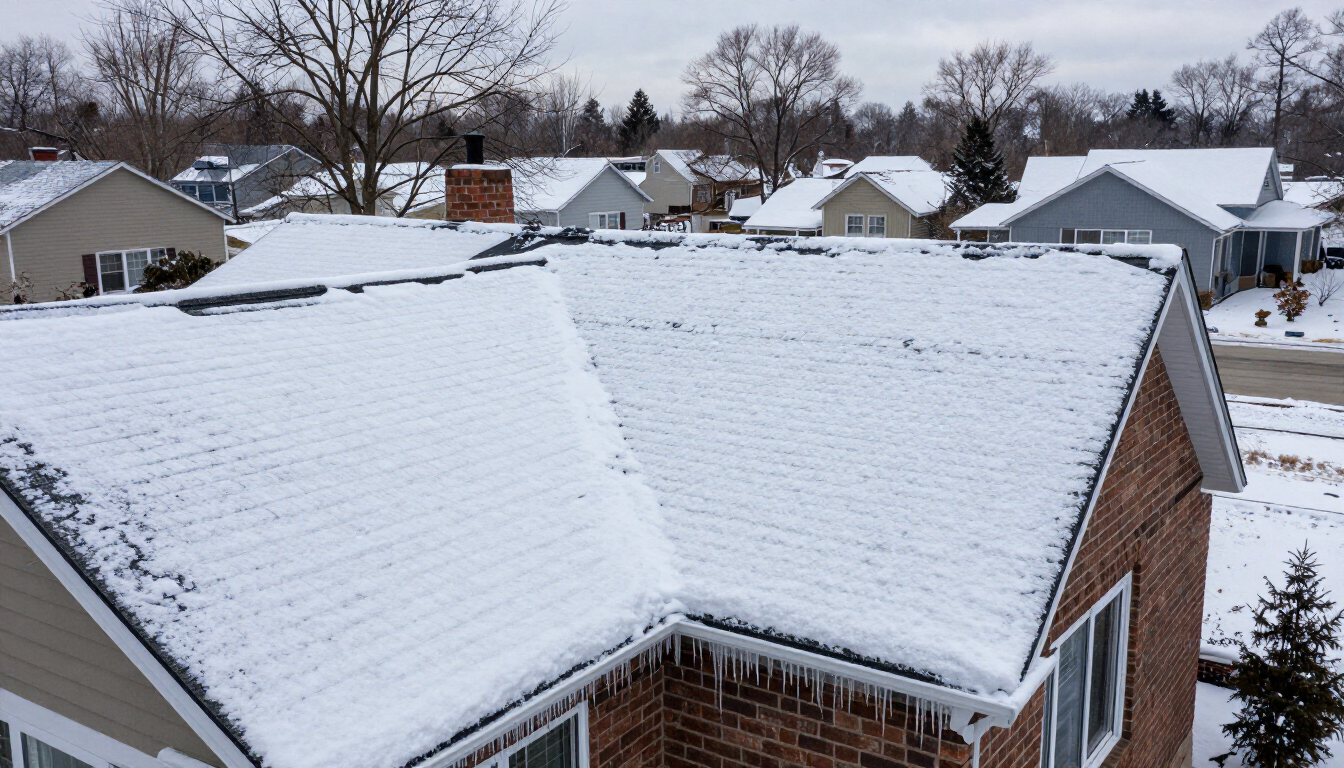
Northern Indiana and Southwest Michigan roofs face demanding seasonal conditions. Heavy snow adds weight, while freeze-thaw cycles can widen small cracks and loosen materials. Ice dams may force melting snow beneath shingles and into attic spaces. Strong wind can lift shingle edges, damage flashing, and remove individual shingles.
These conditions can create damage that is not visible from the yard. After a major storm, inspect ceilings and the attic as well as the exterior. Do not climb onto a wet, icy, or steep roof. Instead, schedule a professional evaluation if you notice:
- New ceiling discoloration or attic moisture
- Shingles scattered around the property
- Bent, lifted, or missing flashing
- Granules collecting near downspouts
- Water entering around chimneys, vents, or skylights
Prompt attention can turn a larger replacement problem into a smaller repair—or help you plan a replacement before emergency damage occurs.
A practical inspection checklist
Before calling a roofer, gather basic information. This helps the inspection move efficiently and gives you a clearer basis for comparing recommendations.
- Note where leaks, stains, or drafts appear inside the home.
- Photograph visible exterior damage from the ground.
- Record the approximate roof age and any past repairs.
- Check whether gutters contain unusual amounts of shingle granules.
- Write down the date of any recent wind, hail, snow, or ice event.
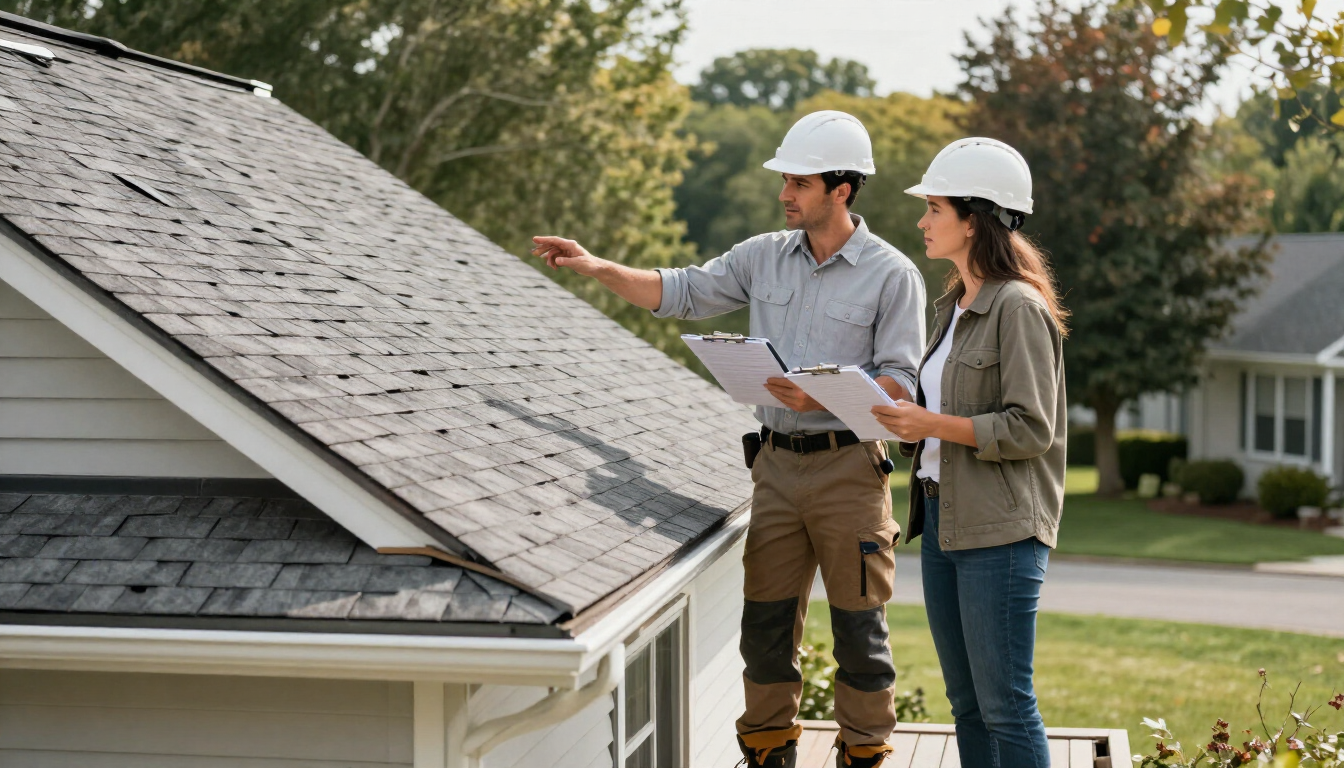
A professional should inspect more than the shingles. The evaluation should consider flashing, valleys, ventilation, underlayment, decking, attic moisture, and signs of structural damage. Ask whether the recommendation is a targeted repair, a repair with additional monitoring, or a complete replacement—and ask why.
Why a professional inspection matters
Roof damage can be deceptive. A small interior stain may come from water that traveled far from the original entry point. Conversely, a missing shingle may be isolated damage that does not justify replacing an otherwise healthy roof.
An experienced roofer can distinguish cosmetic wear from active failure, identify hidden moisture, and explain the expected service life of the existing system. South Bend Roofing has served local homeowners since 1914, bringing long-term knowledge of regional construction and weather conditions.
For examples of completed work, visit our project gallery . You can also learn more about the communities we serve through our service area page .
Roof repair or replacement: How should you decide?
Use the repair-versus-replacement decision as a condition assessment, not a quick visual guess. Repair is often sensible when damage is limited, the roof is younger, and the underlying system remains sound. Replacement deserves serious consideration when damage is widespread, the roof is aging, or leaks and structural concerns continue.
The right next step is a professional roof inspection. South Bend Roofing serves homeowners in South Bend, Mishawaka, Elkhart, La Porte, Niles, and Goshen . Call today to schedule a free roof inspection and receive a clear recommendation for your home.
Key takeaways
- Repair is usually best for isolated damage on a sound roof.
- Replacement is more likely when deterioration is widespread or the roof is near the end of its life.
- Curling shingles, granules, leaks, attic stains, and sagging deserve attention.
- Midwest snow, ice, freeze-thaw cycles, and wind can accelerate roof damage.
- A free professional inspection can clarify your safest, most cost-effective option.